
Menu
latest blog
Lorem ipsum dolor sit amet, consectetur adipiscing elit. Ut elit tellus, luctus nec ullamcorper mattis, pulvinar dapibus leo.

FR-4 Material: The Definitive Guide for PCB Engineers
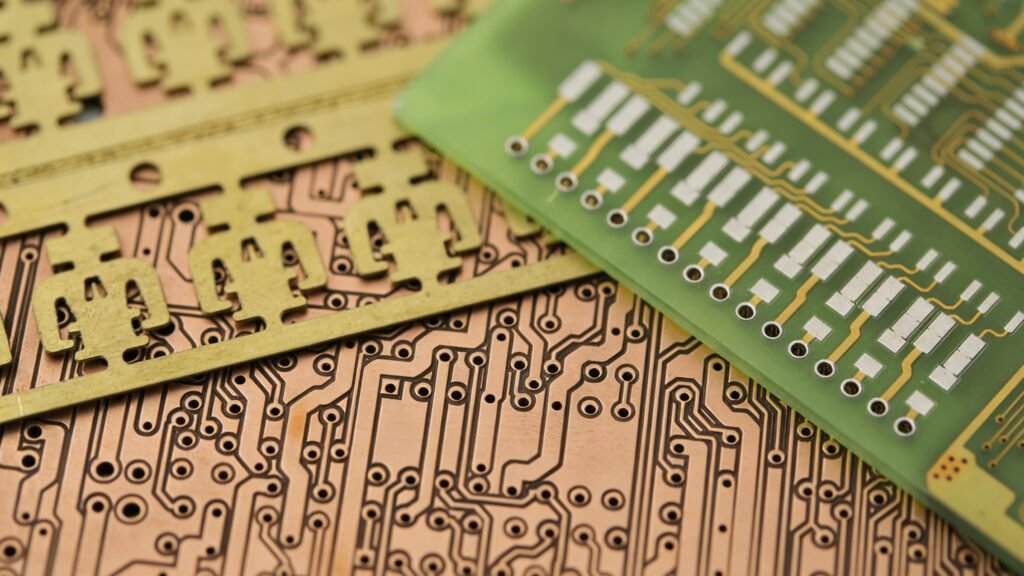
If you were to open 90% of the electronic devices in your home—from your smartphone and laptop to your washing machine and smart thermostat—you would find a green circuit board inside. That board is almost certainly made of FR-4.
In the global electronics manufacturing industry, FR-4 is not just a material; it is the standard. It is the baseline against which all other substrates are measured. But for engineers, procurement officers, and PCB designers, simply knowing the name is not enough. To optimize performance, reduce costs, and ensure reliability in harsh environments (like automotive or industrial sectors), one must understand the deep technical specifications of this composite material.
As a leading manufacturer of Copper Clad Laminates (CCL), Credisyn produces millions of square meters of FR-4 annually. We engineer the core material that powers the modern world. In this comprehensive guide, we will dissect FR-4 from the molecular level up, explaining its composition, its varieties (High-Tg, Halogen-Free), its manufacturing process, and why it remains the undisputed king of PCB substrates.
1. Defining FR-4: Decoding the NEMA Standard
The term “FR-4” is often used as a generic name for fiberglass-reinforced epoxy laminate, but it is actually a specific grade defined by the NEMA (National Electrical Manufacturers Association).
The Breakdown
- FR: Stands for Flame Retardant. This indicates that the material complies with the UL 94 V-0 flammability standard. Ideally, if an FR-4 board catches fire due to an electrical short, it will self-extinguish within 10 seconds once the flame source is removed, preventing the fire from spreading to the rest of the device.
- 4: This number differentiates it from earlier materials like FR-2 (phenolic paper) or FR-3 (epoxy paper). The “4” designates a woven glass reinforced epoxy resin system.
The Chemical Composition
FR-4 is a composite material, meaning it gets its strength from the combination of two distinct elements:
- Reinforcement (The Skeleton): Woven E-Glass (Electrical Grade Glass) cloth. This provides mechanical strength and dimensional stability.
- Matrix (The Muscle): Epoxy Resin. This binds the glass together, provides electrical insulation, and protects against moisture and chemicals.
2. The Anatomy of Credisyn FR-4: What Goes Inside?
At Credisyn, we treat the production of FR-4 as a precise chemical engineering process. The quality of the final PCB depends entirely on the quality of the raw ingredients used in the laminate.
A. The Glass Fabric (E-Glass)
Not all FR-4 is the same because not all glass weaves are the same. The weave style affects the board’s thickness, stiffness, and signal integrity.
- Style 7628: The heavy-duty “workhorse” weave. It is thick and strong, used for standard 1.6mm boards.
- Style 2116: A medium weave used for inner layers in multilayer boards.
- Style 1080 / 106: Extremely fine, thin weaves. These are used for high-density interconnect (HDI) boards and rigid-flex applications where the dielectric layer must be very thin.
- Spread Glass Technology: For high-speed applications, Credisyn uses “Spread Glass” or “Flat Glass.” In standard weaves, there are gaps between the yarn bundles. If a signal trace runs over a gap, its impedance changes. Spread glass flattens the fibers to close these gaps, providing a consistent surface for 5G and high-frequency signals.
B. The Resin System (Epoxy)
The resin defines the thermal performance.
- Standard Epoxy: Difunctional or tetrafunctional epoxy blends.
- Additives: We add curing agents (dicyandiamide or phenolic), accelerators, and inorganic fillers (like silica) to control the Coefficient of Thermal Expansion (CTE).
- Flame Retardants: Historically, bromine was used. However, Credisyn’s modern Halogen-Free FR-4 uses phosphorus and nitrogen compounds to achieve flame retardancy without toxic halogens, meeting strict European environmental standards.
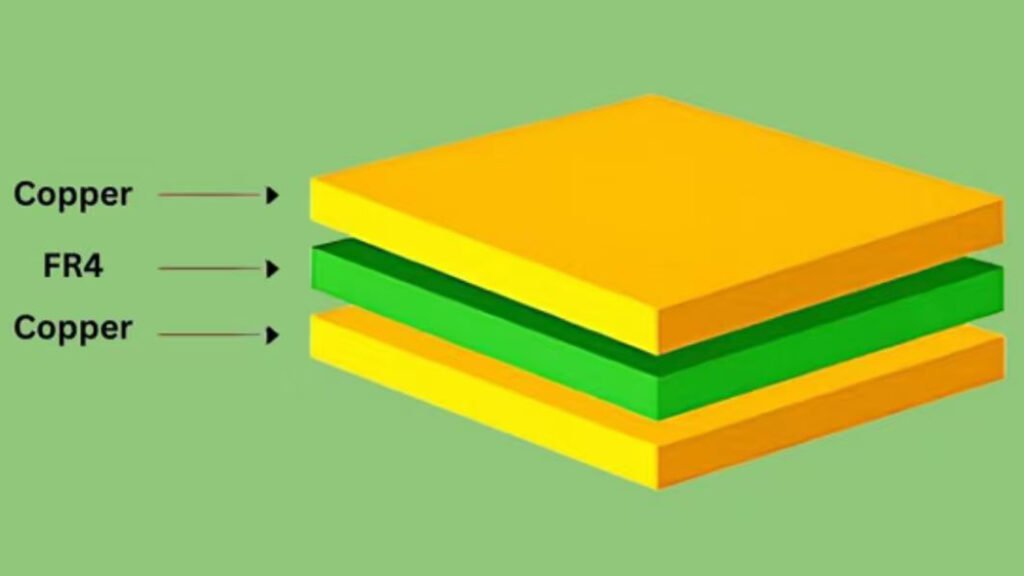
C. The Conductor (Copper Foil)
The “Clad” in Copper Clad Laminate.
- Electro-Deposited (ED) Copper: The standard for FR-4. It has a vertical grain structure, perfect for etching fine lines.
- Reverse Treated Foil (RTF): Used for high-layer count boards to improve the bond strength between the copper and the prepreg.
- Profiles: Credisyn offers Low Profile (LP) and Very Low Profile (VLP) copper to reduce signal loss (skin effect) in high-frequency applications.
3. Key Technical Properties: The Metric of Quality
When selecting an FR-4 material from the Credisyn portfolio, engineers look at three critical categories of data: Thermal, Electrical, and Mechanical.
A. Thermal Properties (The Heat Factor)
This is the most critical selection criteria for lead-free soldering and automotive applications.
- Tg (Glass Transition Temperature): This is the temperature at which the rigid epoxy resin softens and becomes rubbery. It doesn’t melt, but its mechanical properties change drastically.
- Standard Tg (130°C – 140°C): Suitable for consumer electronics, toys, and standard appliances.
- Mid-Tg (150°C): A balance of cost and performance for computers and industrial controls.
- High-Tg (170°C – 180°C): Essential for Automotive (under-hood), Aerospace, and Multilayer boards (>8 layers). High-Tg materials withstand the multiple heat cycles of PCB assembly (reflow soldering) without delaminating.
- Td (Decomposition Temperature): The temperature at which the resin chemically decomposes and loses 5% of its mass. Credisyn’s High-Tg FR-4 typically features a Td of >340°C, ensuring it survives lead-free soldering temperatures (260°C).
- CTE (Coefficient of Thermal Expansion): Materials expand when heated. Specifically, Z-axis expansion is dangerous. If the FR-4 expands too much in the Z-axis (thickness), it can rip the copper plating inside the vias (holes), causing an open circuit. Credisyn optimizes filler content to keep Z-axis expansion below 3.0% (50°C to 260°C).
B. Electrical Properties (The Signal Factor)
- Dk (Dielectric Constant): For standard FR-4, Dk is typically between 4.2 and 4.8. This determines the impedance of the circuit. Stability of Dk over frequency and temperature is a hallmark of Credisyn quality.
- Df (Dissipation Factor / Loss Tangent): This measures how much signal energy is absorbed by the insulating material. Standard FR-4 has a Df of ~0.02. For high-speed signals (like 5G), this is too “lossy,” requiring specialized Low-Loss FR-4 (Df <0.01).
C. Mechanical Properties
- Peel Strength: The force required to rip the copper foil off the board. Credisyn guarantees >1.4 N/mm (for 1oz copper), ensuring traces don’t lift during assembly.
- Water Absorption: Must be <0.2%. Moisture is the enemy of PCBs; trapped water turns to steam during soldering, causing “popcorn” delamination.
4. The Manufacturing Process: From Raw Material to Credisyn Laminate
Understanding how we make FR-4 helps in understanding its quality. It is a two-stage process: Prepreg production and Lamination.
Stage 1: The Treater (Making Prepreg)
- Impregnation: The glass cloth is fed through a bath of liquid epoxy resin.
- Metering: Squeeze rollers control exactly how much resin stays in the cloth (Resin Content – RC%).
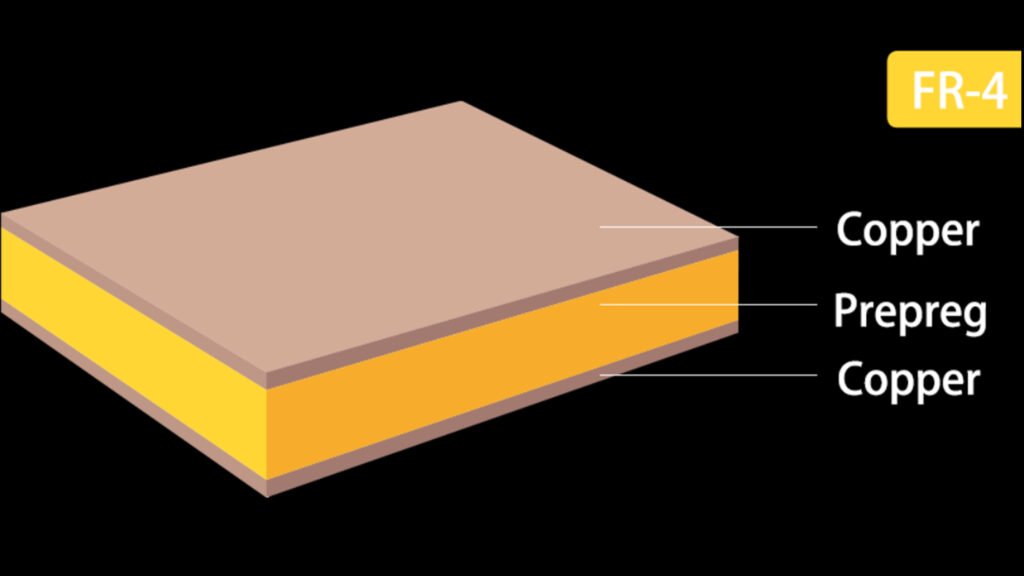
- B-Stage Curing: The wet cloth passes through huge drying ovens. The heat drives off solvents and partially cures the resin. The result is “Prepreg” (Pre-impregnated) or “B-Stage” material. It is dry to the touch but not fully cured.
Stage 2: The Press (Making C-Stage Laminate)
- Lay-Up: In a Class 1000 Cleanroom, we stack the materials: Copper Foil + Prepreg Sheets + Copper Foil.
- Vacuum Lamination: The stack is placed in a massive hydraulic press.
- Vacuum: Removes air bubbles to prevent voids.
- Heat (180°C+): Melts the prepreg resin, allowing it to flow and bond with the copper.
- Pressure (300+ psi): Compresses the layers into a solid rock-hard sheet.
- Curing: The material is now fully cured (C-Stage). It is trimmed, inspected via AOI (Automated Optical Inspection), and packaged.
5. Classifications: Types of FR-4 Material
“FR-4” is not a single product; it is a family. Credisyn offers tailored solutions within this family.
1. Standard FR-4
- Best For: Consumer electronics, simple 2-4 layer boards.
- Features: Cost-effective, good mechanical strength.
- Credisyn Series: CS-FR-Std.
2. High-Tg FR-4
- Best For: Automotive engine control units (ECU), high-layer count servers, industrial power supplies.
- Features: Tg >170°C. Excellent thermal stress resistance. Prevents pad lifting and barrel cracks.
- Credisyn Series: CS-FR-170.
3. Halogen-Free FR-4
- Best For: Mobile devices (Smartphones, Tablets), European market products.
- Features: Eco-friendly. Contains no Chlorine or Bromine. Uses Phosphorus/Nitrogen flame retardants. Often has better thermal reliability than standard FR-4.
- Credisyn Series: CS-HF-Green.
4. High-CTI FR-4
- Best For: High voltage power supplies, EV chargers, Inverters.
- Features: Comparative Tracking Index (CTI) >600V (PLC 0). Prevents electrical arcing across the board surface in humid conditions.
6. FR-4 vs. The Alternatives: A Comparative Analysis
Why use FR-4 instead of other materials?
FR-4 vs. CEM-1 / CEM-3
- CEM-1: Composite paper core. Cheaper than FR-4 but weaker. Only suitable for single-sided boards (no plated holes).
- CEM-3: Glass felt core. Cheaper than FR-4. Good for double-sided boards but lower mechanical strength.
- Winner: FR-4 wins on versatility and strength. It is the only choice for complex multilayer boards.
FR-4 vs. Metal Core (IMS)
- Metal Core (Aluminum/Copper): Used for LED lighting and high-power transistors. Excellent heat dissipation (Thermal Conductivity 1.0 – 5.0 W/m·k).
- FR-4: Poor thermal conductor (0.3 W/m·k).
- Winner: Use Metal Core for heat; use FR-4 for logic and complex routing. Note: Credisyn manufactures both.
FR-4 vs. Polyimide (Flex)
- Polyimide: Flexible, bends without breaking. Used in “Flex” and “Rigid-Flex” PCBs. Expensive.
- FR-4: Rigid. Will crack if bent.
- Winner: FR-4 for rigid structural electronics; Polyimide for wearables and folding devices.
7. Case Studies: Credisyn FR-4 in Action
To illustrate the importance of selecting the right FR-4, let’s look at two Credisyn client scenarios.
Case A: The Automotive Failure
The Problem: A Tier-1 automotive supplier was using a standard Tg 135°C FR-4 for a dashboard control unit. During summer testing in Arizona, the interior temperature of the car spiked. The PCBs suffered from “z-axis expansion failure,” cracking the copper in the plated through holes. The Credisyn Solution: We transitioned the client to CS-FR-170 (High-Tg). The higher glass transition temperature ensured the resin remained rigid and stable up to 170°C. The Result: Zero field failures in the subsequent 50,000 units.
Case B: The “Black Pad” Issue in Telecom
The Problem: A telecom manufacturer using ENIG (Gold) surface finish was experiencing “Black Pad” (corrosion of the nickel layer) leading to brittle solder joints. The Credisyn Solution: The root cause was traced to the curing agent in their generic FR-4 reacting with the gold bath. Credisyn supplied a specialized Phenolic-Cured FR-4 system optimized for chemical resistance against harsh plating baths. The Result: Yield improved from 92% to 99.8%.
8. Material Selection Guide: When to Choose High-Tg?
One of the most common questions our Technical Application Group receives is: “Do I need High-Tg FR-4?”
Choose Standard FR-4 (Tg 130-140°C) if:
- The PCB has fewer than 6 layers.
- The copper thickness is standard (1oz).
- The operating environment is benign (Office/Home).
- You are using Lead-Based solder (rare, but lower temp).
Choose High-Tg FR-4 (Tg 170°C+) if:
- Lead-Free Soldering: You use RoHS compliant solders (SAC305) which require reflow temperatures of 240°C-260°C.
- Multilayer Boards: You have 8+ layers. The cumulative stress of Z-axis expansion in thick boards is high.
- Thick Copper: You use 3oz+ copper. The mismatch in expansion between copper and resin requires a stronger resin.
- HDI Technology: You use Micro-vias and multiple lamination cycles.
9. Storage and Handling of FR-4
Even the best FR-4 can fail if mishandled before it becomes a PCB. FR-4 is hygroscopic (it absorbs moisture from the air).
- Credisyn Standard: We ship all laminates in vacuum-sealed moisture barrier bags with desiccant.
- Fabricator Best Practice: Once opened, laminates should be processed quickly. If inner layers (cores) sit for days, they must be baked in an oven before lamination to drive out moisture. Failure to bake wet cores results in delamination (separation of layers) during the intense heat of reflow soldering.
10. The Future of FR-4: Evolution, Not Extinction
Will FR-4 be replaced? Unlikely. It is evolving.
As 5G brings higher frequencies and EVs bring higher voltages, FR-4 formulations are changing.
- Low-Loss FR-4: Using modified epoxy resins to lower the Df (Dissipation Factor) to compete with more expensive hydrocarbon laminates for 5G sub-6GHz bands.
- Ultra-Thin FR-4: Producing cores as thin as 0.05mm for ultra-dense smartphones and smartwatches.
- Greener FR-4: Moving beyond Halogen-Free to fully bio-based resins to reduce the carbon footprint of electronics.
11. Why Partner with Credisyn for FR-4?
In a market flooded with materials, Credisyn stands apart through Reliability and Consistency.
- Vertical Integration: We control the formula. We don’t just buy resin; we formulate it. This allows us to tweak CTE, Tg, and flow characteristics to meet specific customer needs.
- Capacity: Our automated facility ensures that whether you need 10 sheets for a prototype or 100,000 sheets for a global rollout, the material properties remain identical from batch to batch.
- Certification: All Credisyn FR-4 materials are UL Recognized, IPC-4101 Compliant, and manufactured in an IATF 16949 certified facility.
Conclusion
FR-4 is the unsung hero of the digital age. It is a material that balances mechanical strength, electrical insulation, thermal resistance, and cost-effectiveness better than any other composite in history.
However, “FR-4” is no longer a simple commodity. It is a sophisticated family of materials ranging from standard consumer grades to high-performance automotive substrates. Understanding the nuances of Tg, CTE, and Resin Systems is the key to building reliable electronics.
At Credisyn, we are not just suppliers; we are material scientists. We invite you to explore our range of High-Tg, Halogen-Free, and High-CTI FR-4 laminates.
Ready to upgrade your PCB reliability? Contact the Credisyn team today for data sheets, samples, or a technical consultation on choosing the right FR-4 for your next innovation.
Frequently Asked Questions (FAQ)
Q: Is FR-4 toxic? A: Cured FR-4 is inert and non-toxic. However, machining it (drilling/routing) produces fiberglass dust which is a respiratory irritant. Proper ventilation is required. During burning, standard FR-4 can release bromine gases, which is why Halogen-Free FR-4 is preferred for eco-friendly applications.
Q: Can FR-4 be used for High Frequency (RF) applications? A: For frequencies up to 1-2 GHz, standard FR-4 works well. For frequencies above 5 GHz (like 5G or Radar), standard FR-4 is too “lossy” (absorbs signal). For these applications, Credisyn recommends our High-Speed Series or specialized Hybrid FR-4/PTFE laminates.
Q: What is the difference between FR-4 and G-10? A: G-10 was the predecessor to FR-4. It is also a glass-epoxy laminate but lacks the self-extinguishing flame retardants (it is not UL 94 V-0 compliant). FR-4 has largely replaced G-10 in electronics for safety reasons.
Q: What is the shelf life of FR-4? A: Fully cured C-Stage laminate has a very long shelf life (years) if stored correctly. However, Prepreg (B-Stage) has a shelf life of 3-6 months and must be stored in a cool environment (<23°C) to prevent the resin from advancing (curing) prematurely.
Q: Does Credisyn sell PCB boards or just the material? A: Credisyn is a CCL Manufacturer. We produce the Copper Clad Laminate sheets (the raw material). We sell these sheets to PCB Fabricators who then etch, drill, and plate them to create the finished circuit board.
Paper core copper-clad substrate
Glass cloth copper-clad substrate
Cloth paper composite copper-clad substrate
Cloth felt composite copper-clad substrate
Paper core copper-clad substrate
Glass cloth copper-clad substrate
Cloth paper composite copper-clad substrate
Cloth felt composite copper-clad substrate
Credisyn quality copper clad laminates for global electronics
Credisyn-Professional CCL manufacturer, delivering reliable electronic substrate solutions worldwide.
Quick Link
Email: info@credisyn.com
Quick Link
Add: No. 18 Hong Kong Middle Road, Qingdao, China
Copyright © 2025 Website Title Copper Cladd Laminated Supported by Credisyn technology