
Menu
latest blog
Lorem ipsum dolor sit amet, consectetur adipiscing elit. Ut elit tellus, luctus nec ullamcorper mattis, pulvinar dapibus leo.

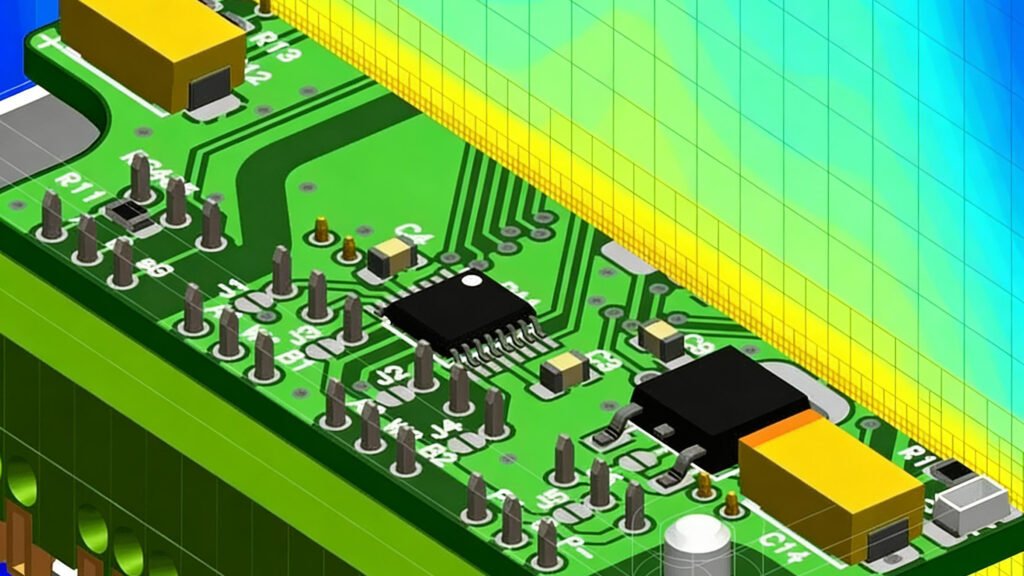
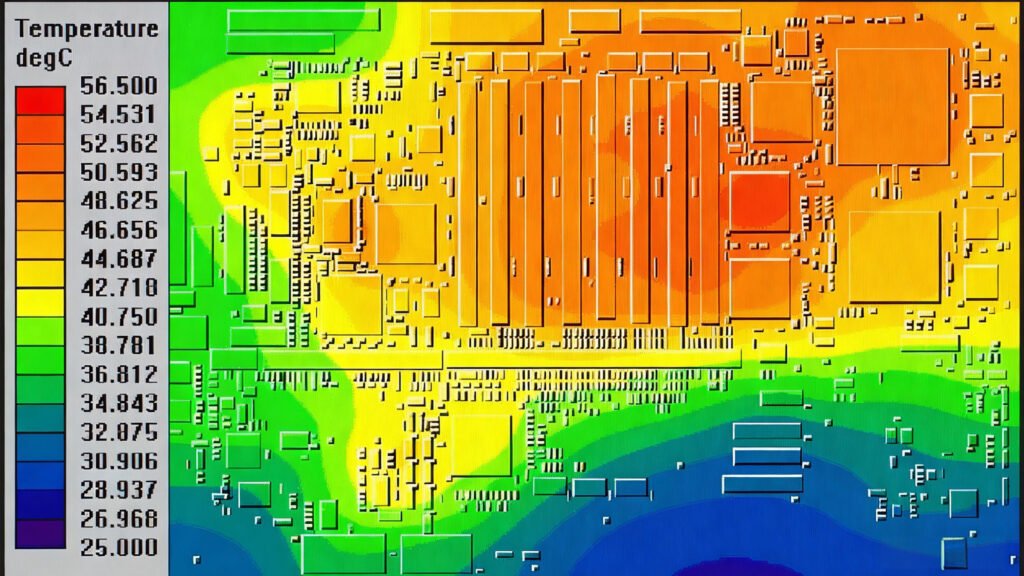
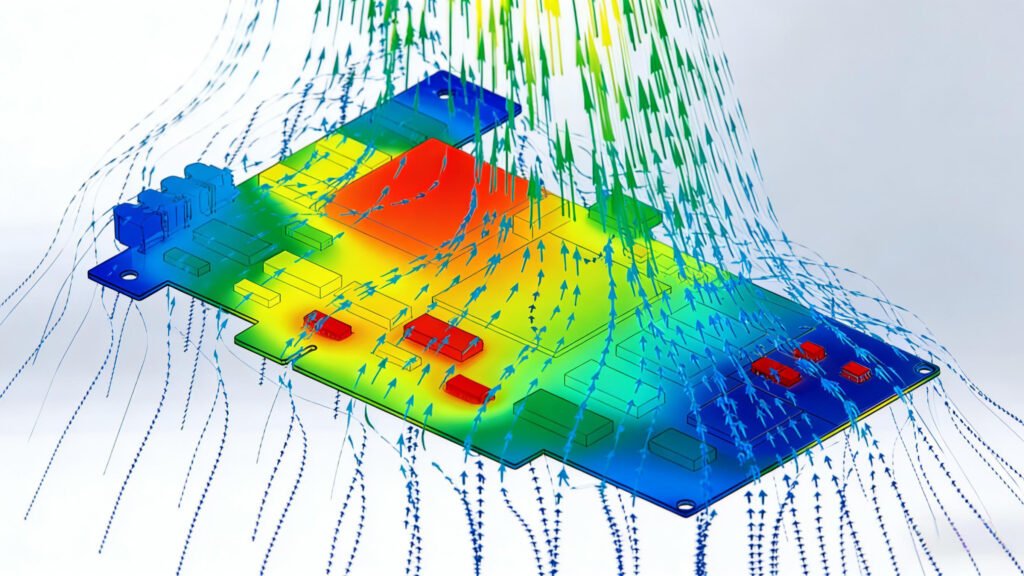
The Ultimate PCB Thermal Guide: Materials, Design & Credisyn Solutions
In the rapidly evolving world of electronics manufacturing, one law remains absolute: Heat is the enemy.
As devices shrink in size while growing exponentially in power—driven by the demands of Electric Vehicles (EVs), 5G telecommunications, and high-intensity LED lighting—thermal density has become the primary bottleneck for design engineers. A Printed Circuit Board (PCB) is no longer just a carrier for components; it must act as a sophisticated thermal management system.
For Credisyn, a specialized factory dedicated to the production of high-performance Copper Clad Laminates (CCL), we understand that effective cooling begins at the molecular level of the substrate. You cannot cool a high-power device effectively if the foundation it sits upon is a thermal insulator.
This comprehensive guide delves deep into the science of PCB thermal management. We will explore the physics of heat transfer, the limitations of standard FR-4, the advanced material solutions Credisyn offers (including our high-conductivity Aluminum and Heavy Copper series), and real-world case studies where superior material selection saved the design.
Part 1: The Physics of Thermal Failure
Before discussing solutions, we must understand the problem. Why do PCBs fail under heat, and how does that heat travel?
The Three Modes of Heat Transfer in a PCB
- Conduction: This is the most critical mode for PCB substrates. It is the transfer of heat through a solid material (from the hot component junction, through the copper pad, through the dielectric laminate, to the heatsink). Credisyn’s primary focus is optimizing Conduction.
- Convection: The transfer of heat from the surface of the board to the air (or fluid) surrounding it.
- Radiation: The emission of electromagnetic waves (infrared) from the board. While less dominant in standard PCBs, specialized solder masks can enhance this.
The Critical Metric: Junction Temperature ($T_j$)
The lifespan of a semiconductor follows the Arrhenius equation. A general rule of thumb in electronics reliability is that for every 10°C rise in junction temperature ($T_j$), the component’s operational life is cut in half. Furthermore, excessive heat causes:
- Delamination: Different materials (Copper, Glass, Resin) expand at different rates (CTE mismatch), tearing the board apart.
- Electrochemical Migration: Heat accelerates the growth of dendritic crystals, leading to short circuits (CAF failure).
- Performance Drift: In RF applications, heat alters the dielectric constant ($D_k$), causing signal impedance to drift.
The goal of thermal management is to minimize the Thermal Resistance ($R_{th}$) of the path from the junction to the ambient environment. The biggest barrier in that path is often the PCB dielectric itself.
Part 2: The Bottleneck – Why Standard FR-4 is Not Enough
For decades, FR-4 (Flame Retardant Type 4) has been the industry standard. It is a composite of woven fiberglass and epoxy resin. While it is an excellent electrical insulator, it is a terrible thermal conductor.
- Thermal Conductivity of Standard FR-4: ~0.25 W/m·k to 0.3 W/m·k.
- Thermal Conductivity of Copper: ~385 W/m·k.
- Thermal Conductivity of Aluminum: ~205 W/m·k.
The Thermal Dam Effect: Imagine a highway (the copper trace) moving traffic (heat) at 385 mph. Suddenly, the road turns into a dirt path (the FR-4 dielectric) with a speed limit of 0.25 mph. Traffic backs up immediately. This is exactly what happens in high-power PCBs. The heat generated by a MOSFET or LED travels instantly through the copper pad but hits a “thermal dam” when it tries to pass through the FR-4 to get to the other side or a heatsink.
This bottleneck results in localized hotspots, causing the resin to carbonize and the component to overheat. To solve this, Credisyn engineers focused on altering the chemistry of the dielectric layer itself.
Part 3: Credisyn’s Advanced Material Solutions
At Credisyn, we have developed specific product lines designed to break the thermal bottleneck. Our solutions range from modifying the resin matrix of standard laminates to completely replacing the substrate core with metal.
1. The CS-AL Series: Aluminum-Based CCL (IMS)
The most effective solution for high-power applications is the Insulated Metal Substrate (IMS), also known as Metal Core PCB (MCPCB).
Structure:
- Circuit Layer: Copper foil (1oz to 10oz).
- Dielectric Layer: The critical technology. A polymer-ceramic blend.
- Base Layer: Aluminum (or Copper) plate.
The Credisyn Difference: The magic lies in the dielectric layer. Standard epoxy is an insulator. Credisyn engineers incorporate advanced ceramic nano-fillers (such as Alumina $Al_2O_3$ and Boron Nitride $BN$) into the resin matrix. These fillers create a “thermal highway” for phonons (heat energy) to travel through the resin without allowing electrons (electricity) to pass.
Credisyn CS-AL Specifications:
- Thermal Conductivity: We offer a tiered portfolio ranging from 1.0 W/m·k (Entry level) to 3.0 W/m·k (High Performance) and up to 8.0 W/m·k (Ultra-Performance).
- Thermal Resistance ($R_{th}$): As low as 0.05 °C-in²/W.
- Breakdown Voltage: Despite high thermal transfer, our dielectric maintains electrical isolation up to 6000V AC, crucial for EV powertrains.
2. Heavy Copper Laminates
Sometimes, the heat isn’t generated by a component, but by the current passing through the traces themselves (Joule heating). For power distribution boards, Credisyn offers Heavy Copper laminates.
- Capabilities: We manufacture CCLs with copper weights up to 6oz (210μm) standard, with custom capabilities up to 12oz.
- Technology: Producing heavy copper CCL requires specialized lamination techniques. Credisyn uses high-flow, high-resin-content prepregs (like style 7628 or 2116 multiple plies) to ensure that the thick copper patterns are fully encapsulated without air voids, which would otherwise act as thermal insulators.
3. High-Tg / High-Thermal FR-4
For multilayer boards where a metal core is not feasible (due to complex routing or through-holes), Credisyn offers the High-Tg / Low-CTE Series.
- Innovation: By using fillers and multifunctional epoxy resin systems, we boost the thermal conductivity of the laminate to 0.6 – 0.8 W/m·k (2-3x standard FR-4) and raise the Glass Transition Temperature ($T_g$) to 180°C+. This allows the board to survive higher operating temperatures without losing mechanical integrity.
Part 4: Technical Deep Dive – Selecting the Right Metal Core
When choosing a Credisyn Aluminum-Based CCL, engineers must select the correct alloy for the base plate. This is often an overlooked aspect of thermal design.
Alloy 5052: The High-Strength Workhorse
- Magnesium Content: ~2.5%
- Characteristics: High tensile strength and moderate thermal conductivity (~138 W/m·k).
- Best For: Applications requiring mechanical rigidity or where the PCB is a structural part of the chassis. Ideal for large street lighting arrays or battery module covers.
Alloy 6061: The Thermal Specialist
- Magnesium & Silicon Content: Balanced.
- Characteristics: Higher thermal conductivity (~167 W/m·k) but slightly softer than 5052.
- Best For: Ultra-high performance thermal applications where every degree counts.
Copper Base (C1100): The Ultimate Heat Sink
- Characteristics: Extremely high thermal conductivity (~385 W/m·k).
- Trade-off: Heavier and more expensive than aluminum.
- Best For: “Chip-on-Board” (COB) packaging, high-end IGBTs, and military-grade power amplifiers.
Credisyn Manufacturing Note: Regardless of the alloy, Credisyn utilizes a protective backing film and specialized anodizing or passivation treatments on the metal side to prevent oxidation and ensure good adhesion to external heatsinks.
Part 5: Case Studies – Credisyn in Action
Theory is useful, but results matter. Here are three distinct scenarios where Credisyn’s thermal management solutions solved critical engineering failures.
Case Study 1: Automotive Matrix LED Headlamp
The Challenge: A Tier-1 Automotive supplier was designing a Matrix LED headlamp system. The design packed 64 high-power LEDs into a tight cluster. Their initial prototype used a competitor’s standard 1.5 W/m·k MCPCB. The Failure: During testing at ambient temperatures of 85°C (engine bay conditions), the junction temperature of the central LEDs spiked above 135°C, triggering the thermal throttling circuit and dimming the lights. The Credisyn Solution: We recommended upgrading to the Credisyn CS-AL-4000 Series (4.0 W/m·k) with a 50μm ultra-thin dielectric. The Result: The thinner dielectric and higher conductivity reduced the thermal impedance significantly. The junction temperature dropped by 18°C, allowing the LEDs to run at full brightness while passing the AEC-Q100 reliability qualification.
Case Study 2: EV On-Board Charger (OBC)
The Challenge: An electric vehicle manufacturer needed a robust substrate for their 11kW On-Board Charger. The system handled 800V inputs. The Failure: Standard FR-4 boards were suffering from carbonization near the MOSFETs due to sustained heat, raising safety concerns about dielectric breakdown (arcing). The Credisyn Solution: The client adopted Credisyn’s High-CTI (Comparative Tracking Index) Heavy Copper Laminate. We used a High-Tg (180°C) resin system with 3oz copper to handle the current, combined with inorganic fillers to boost thermal dissipation. The Result: The board temperature stabilized 12°C lower than the FR-4 limit. Furthermore, the High-CTI resin (>600V) provided an extra safety margin against high-voltage tracking, ensuring the charger met strict European safety standards.
Case Study 3: 5G Base Station Power Amplifier
The Challenge: A telecom infrastructure provider was struggling with the heat generated by GaN (Gallium Nitride) power amplifiers in their massive MIMO antenna arrays. The Failure: The ceramic substrates they initially used were too brittle and expensive for mass production. The Credisyn Solution: We supplied a hybrid build using Credisyn Copper-Base Laminate. The direct vertical thermal path through the copper base matched the performance of ceramics but at 40% of the cost. The Result: The amplifiers maintained stable gain and linearity, and the client successfully rolled out the units for a nationwide 5G deployment.
Part 6: Design Guidelines for Thermal Optimization
Using Credisyn’s high-performance laminates is the first step, but the PCB layout must also be optimized to maximize their potential. Our application engineering team recommends the following design strategies:
1. Maximize Copper Balance
Ensure that copper pouring is balanced on the top layer. Large copper planes act as heat spreaders. If you use a Credisyn IMS, try to leave as much copper as possible on the circuit layer to spread the heat laterally before it travels vertically through the dielectric.
2. Thermal Vias (For FR-4 / CEM-3 Designs)
If you are not using a metal core board, you must use thermal vias.
- Design: Place vias directly under the thermal pad of the component.
- Optimization: Use “Via-in-Pad” technology (plated shut).
- Quantity: More is better. A grid of vias reduces the thermal resistance of the Z-axis.
- Credisyn Tip: When using our High-Tg laminates, the dimensional stability is superior, allowing for denser via fields without risking barrel cracks during reflow.
3. Dielectric Thickness Selection
In an IMS (Aluminum) board, the dielectric is the main thermal barrier.
- Rule: The thinner the dielectric, the better the thermal performance.
- Trade-off: Thinner dielectrics have lower voltage breakdown limits.
- Credisyn Advice: If your operating voltage is low (<500V), choose our 75μm or 50μm dielectric for maximum cooling. If you are dealing with high voltage (>2kV), stick to 100μm or 150μm.
Part 7: Quality Assurance – How We Measure Thermal Conductivity
In the CCL industry, “Thermal Conductivity” numbers can be misleading if the testing method isn’t specified. Some manufacturers quote the conductivity of the ceramic filler rather than the cured composite dielectric.
At Credisyn, we believe in radical transparency. We utilize strictly standardized testing protocols to ensure the data on our datasheets matches the performance in your factory.
Laser Flash Analysis (ASTM E1461)
This is the gold standard for measuring thermal diffusivity. A laser pulse heats one side of the sample, and an IR detector measures the temperature rise on the opposite side. This non-contact method provides the most accurate data for our High-k materials.
Hot Disc Method (ISO 22007-2)
For bulk materials and thick laminates, we use the Transient Plane Source (Hot Disc) method. This measures both thermal conductivity and thermal diffusivity simultaneously.
Dielectric Breakdown Testing (IPC-TM-650)
Thermal performance cannot come at the cost of electrical safety. Every batch of Credisyn IMS undergoes Hi-Pot testing (High Potential) to ensure the dielectric layer has zero pinholes or voids. Our Class 1000 Clean Room manufacturing environment is critical here, ensuring no dust particles create weak points in the isolation layer.
Conclusion: Cool Boards, Reliable Products
In the modern electronics landscape, thermal management is not an afterthought—it is a primary design constraint. The difference between a product that lasts for a decade and one that fails in a month often lies in the substrate it is built upon.
Credisyn is more than just a material supplier; we are a partner in your thermal engineering strategy. Whether you need the brute force cooling of an 8.0 W/m·k Aluminum-base laminate for a laser system, or the rugged reliability of a High-Tg Heavy Copper board for an EV powertrain, our factory has the technology and the capacity to deliver.
Don’t let heat limit your innovation.
Ready to Optimize Your Thermal Design?
- Download Datasheets: Explore the full technical specs of our CS-AL Aluminum Series and High-Performance FR-4.
- Request Samples: Validate our thermal conductivity in your own lab.
- Consult an Engineer: Our technical team is ready to review your stack-up and recommend the ideal material for your specific thermal load.
Contact Credisyn today. Let’s build the future of electronics—cool, efficient, and reliable.
Frequently Asked Questions (FAQ) regarding PCB Thermal Management
Q1: What is the difference between Thermal Conductivity and Thermal Impedance? A: Thermal Conductivity (k) is a property of the material itself (how fast heat moves through it). Thermal Impedance (Z) is the total resistance of the specific stack-up, taking into account thickness and surface area. In PCB design, lower Impedance is the goal. Credisyn improves this by offering high k materials in ultra-thin layers.
Q2: Can I process Credisyn Aluminum-Based CCLs (IMS) using standard PCB equipment? A: Mostly, yes. The etching and solder mask processes are standard. However, mechanical routing requires specialized heavy-duty bits or V-scoring blades designed for metal. Punching is also a common method for IMS. We provide detailed processing guides to all our clients.
Q3: Why shouldn’t I just use a thicker copper layer to cool my board? A: Thicker copper (e.g., 4oz) helps spread heat laterally across the surface, but it doesn’t help move heat vertically through the dielectric to the heatsink. If the dielectric is an insulator, the heat is trapped in the copper. You need a high-conductivity dielectric (like Credisyn CS-AL series) to effectively drain that heat away.
Q4: Does Credisyn offer double-sided or multilayer Aluminum PCBs? A: Yes. While single-layer IMS is the most common, we manufacture substrates for double-sided and multilayer metal-core boards. These require complex “blind via” construction and sequential lamination, processes in which our factory is fully capable and experienced.
Q5: What is the maximum operating temperature (MOT) for your thermal laminates? A: Our standard High-Tg materials and Aluminum-based laminates are rated for continuous operation at 130°C to 150°C (UL MOT rating), with short-term survival during reflow soldering up to 288°C. For extreme environments, we offer specialized series rated for higher continuous usage.
Paper core copper-clad substrate
Glass cloth copper-clad substrate
Cloth paper composite copper-clad substrate
Cloth felt composite copper-clad substrate
Paper core copper-clad substrate
Glass cloth copper-clad substrate
Cloth paper composite copper-clad substrate
Cloth felt composite copper-clad substrate
Credisyn quality copper clad laminates for global electronics
Credisyn-Professional CCL manufacturer, delivering reliable electronic substrate solutions worldwide.
Quick Link
Email: info@credisyn.com
Quick Link
Add: No. 18 Hong Kong Middle Road, Qingdao, China
Copyright © 2025 Website Title Copper Cladd Laminated Supported by Credisyn technology