
Menu
latest blog
Lorem ipsum dolor sit amet, consectetur adipiscing elit. Ut elit tellus, luctus nec ullamcorper mattis, pulvinar dapibus leo.

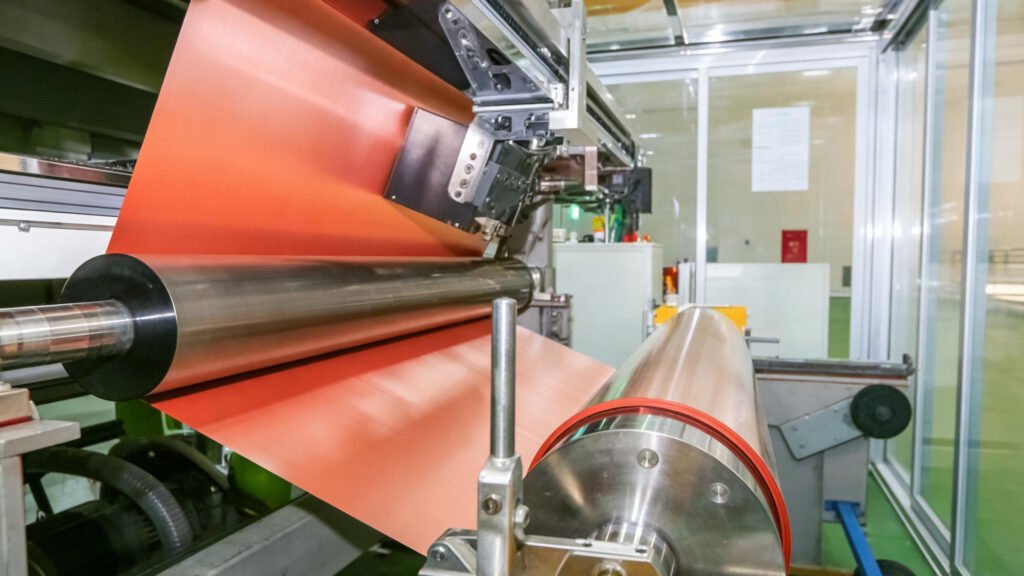
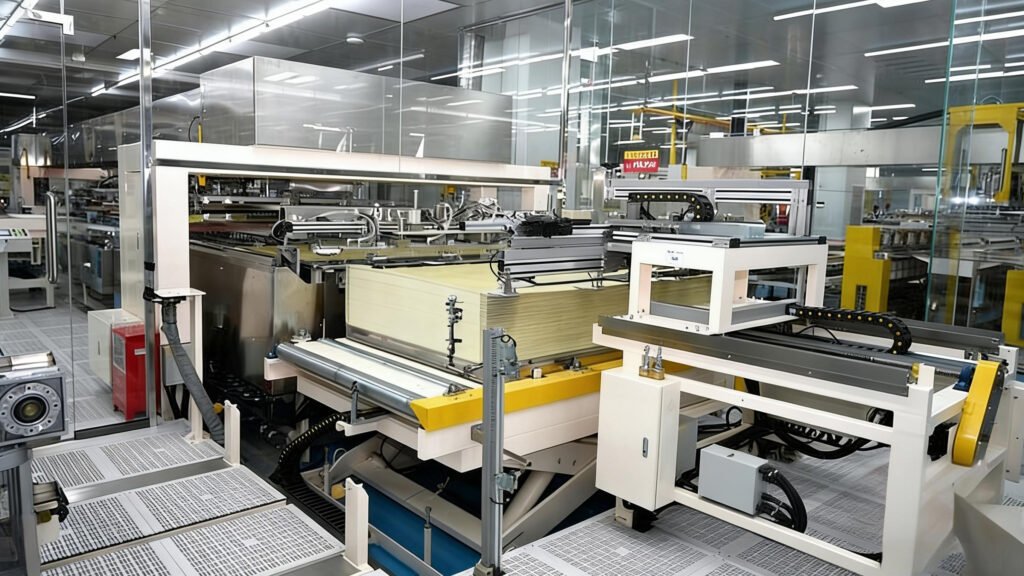
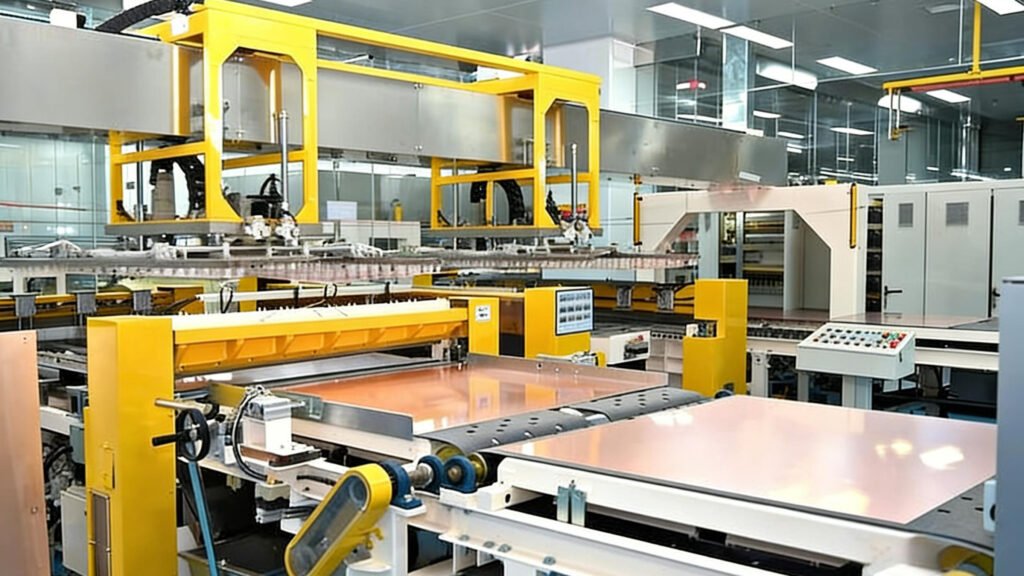
How Copper Clad Laminate (CCL) Is Manufactured – Credisyn
Copper Clad Laminate (CCL) serves as the foundational material for Printed Circuit Boards (PCBs)—the integral componentry of modern electronics. At Credisyn, we take pride in our high-performance laminates, meticulously produced to withstand gigahertz signals, high voltages, and extreme thermal conditions. In this detailed guide, we will walk you through the intricate manufacturing process of CCL, from material selection to final quality inspections.
Understanding the Components of CCL
1. Reinforcement: Glass Fabric
The structural integrity of CCL starts with the reinforcement. Credisyn utilizes various types of woven E-glass fibers:
- Styles:
- 7628 Style: A heavier weave for thicker cores.
- 1080/2116 Styles: Finer weaves for thinner dielectrics, enhancing laser drilling precision.
- Surface Treatment: The glass filaments receive a silane coupling treatment, ensuring effective bonding with the resin and preventing issues like delamination.
2. The Matrix: Resin System
The resin functions as an adhesive and insulator, and includes:
- Base Polymer: Epoxy resin.
- Curing Agents: Chemicals that react with the epoxy to create cross-linked networks.
- Fillers: These adjust properties like the Coefficient of Thermal Expansion (CTE) and improve flame retardancy.
- Solvents: Chemicals that facilitate the resin’s penetration into glass cloth.
3. Conductor: Copper Foil
The copper foil becomes the circuitry of the PCB:
- Electro-Deposited (ED) Copper: Produced by plating copper onto a titanium drum.
- Tooth Profile: The matte side of the copper is treated to create a rough texture, which enhances resin adhesion. For high-frequency applications, we use Very Low Profile (VLP) or HVLP copper to minimize signal loss.
Step-by-Step Manufacturing Process
Part 1: Resin Preparation
- Dissolution: Solid epoxy resins are dissolved in solvents in controlled mixing tanks.
- Blending: Hardiners and fillers are incorporated.
- Viscosity Control: Continuous monitoring ensures optimal viscosity, crucial for proper impregnation into glass fibers.
Part 2: Creating Prepreg
- Dip Coating: The glass cloth is immersed in resin varnish.
- Squeeze Rolls: Precision measurement of resin content (RC%) as the wet cloth exits.
- Drying: The cloth moves into an oven to remove solvents, achieving a semi-cured B-Stage state, still soft enough to melt upon reheating.
Part 3: Lay-Up Process
- Clean Room Assembly: In a sanitized environment, stainless steel plates, copper foil, and prepreg sheets are stacked.
- Automation: Robotic arms ensure precise assembly to minimize contamination.
Part 4: High-Pressure Lamination
- Vacuum Draw: Air is evacuated to eliminate trapped gases.
- Heating: The temperature rises to melt the B-Stage resin.
- Pressure Application: Hydraulic presses apply significant force (300–400 psi) to ensure uniformity and high-density bonding.
- Curing: The material is held at temperature to fully cross-link the resin, solidifying the laminate.
- Controlled Cooling: Gradual cooling maintains dimensional integrity, preventing warpage.
Part 5: Finishing Touches
- Disassembly: The stack is removed from the press.
- Trimming and Cleaning: Edges are trimmed, and surfaces are cleaned of contaminants.
Quality Control Measures
Before shipping, each laminate undergoes rigorous testing:
- Automated Optical Inspection (AOI): Scans for surface defects.
- Thermal Stress Testing: Measures resistance to thermal shock.
- Peel Strength Testing: Assesses adhesion between copper and resin.
- Electrical Testing: Measures dielectric breakdown and impedance.
Variations in Production: Beyond Standard FR-4
At Credisyn, we also specialize in:
- Aluminum-Based CCL (IMS): For enhanced thermal management, featuring aluminum cores.
- High-Frequency Laminates: Utilizing PTFE for 5G applications, requiring specialized processing parameters.
- Halogen-Free Materials: Eco-friendly options that meet stringent environmental regulations.
The Future of CCL Manufacturing
Credisyn is pioneering next-generation manufacturing technologies:
- Slot Die Coating: Allows for precise resin thickness control within 1 micron.
- Continuous Lamination: Increases efficiency and consistency.
- AI-Driven Process Control: Implementing AI technologies for predictive analytics in manufacturing processes.
Conclusion: The Credisyn Commitment to Quality
At Credisyn, we see the production of Copper Clad Laminate as both an art and a science. Each step, from raw material to final inspection, is refined to create durable, reliable laminates that serve as the backbone of various electronic applications.
Ready to Accelerate Your Projects?
For technical datasheets, samples, or a virtual tour of our manufacturing facility, reach out to the Credisyn engineering team today!
Frequently Asked Questions (FAQ)
Q1: What is the difference between Prepreg and Core?
A: Prepreg is semi-cured glass cloth with resin (B-Stage), whereas Core (C-Stage) is fully cured laminate combining copper and prepreg.
A: Prepreg is semi-cured glass cloth with resin (B-Stage), whereas Core (C-Stage) is fully cured laminate combining copper and prepreg.
Q2: Why does Copper Clad Laminate warp?
A: Warping can arise from thermal expansion mismatches or improper cooling cycles during manufacturing.
A: Warping can arise from thermal expansion mismatches or improper cooling cycles during manufacturing.
Q3: What does “Tg” mean in CCL manufacturing?
A: Tg (Glass Transition Temperature) indicates the temperature where the resin becomes pliable. Higher Tg means enhanced thermal resistance.
A: Tg (Glass Transition Temperature) indicates the temperature where the resin becomes pliable. Higher Tg means enhanced thermal resistance.
Q4: How does Credisyn ensure thickness consistency?
A: Our process employs X-ray gauges and rigorous control of the resin-to-glass ratio, alongside precision-engineered flat press plates.
A: Our process employs X-ray gauges and rigorous control of the resin-to-glass ratio, alongside precision-engineered flat press plates.
Q5: Can Credisyn produce custom-sized laminates?
A: Yes, we accommodate custom panel sizes for client needs, minimizing waste and enhancing production efficiency.
A: Yes, we accommodate custom panel sizes for client needs, minimizing waste and enhancing production efficiency.
Paper core copper-clad substrate
Glass cloth copper-clad substrate
Cloth paper composite copper-clad substrate
Cloth felt composite copper-clad substrate
Paper core copper-clad substrate
Glass cloth copper-clad substrate
Cloth paper composite copper-clad substrate
Cloth felt composite copper-clad substrate
Credisyn quality copper clad laminates for global electronics
Credisyn-Professional CCL manufacturer, delivering reliable electronic substrate solutions worldwide.
Quick Link
Email: info@credisyn.com
Quick Link
Add: No. 18 Hong Kong Middle Road, Qingdao, China
Copyright © 2025 Website Title Copper Cladd Laminated Supported by Credisyn technology