
Menu
latest blog
Lorem ipsum dolor sit amet, consectetur adipiscing elit. Ut elit tellus, luctus nec ullamcorper mattis, pulvinar dapibus leo.

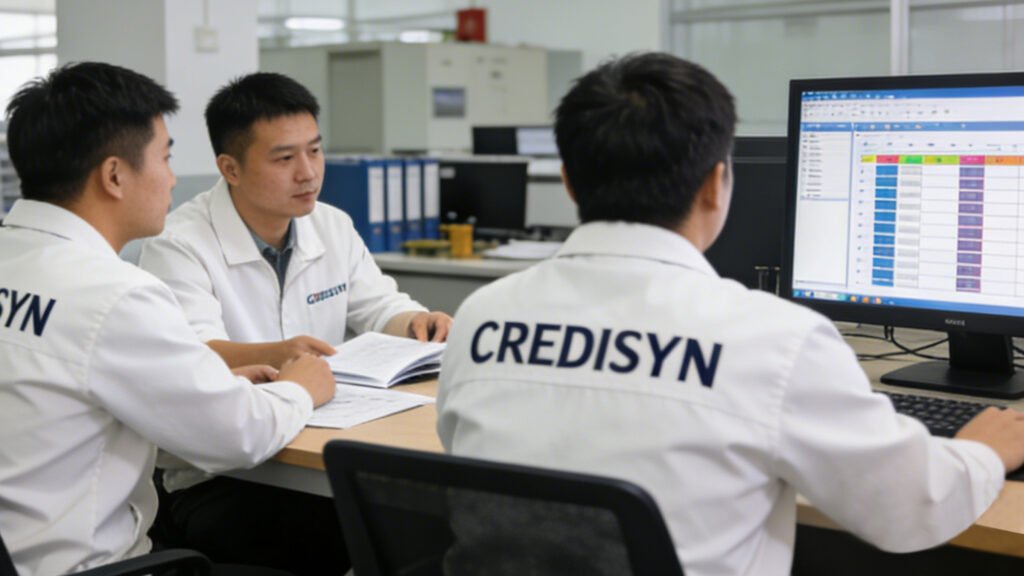
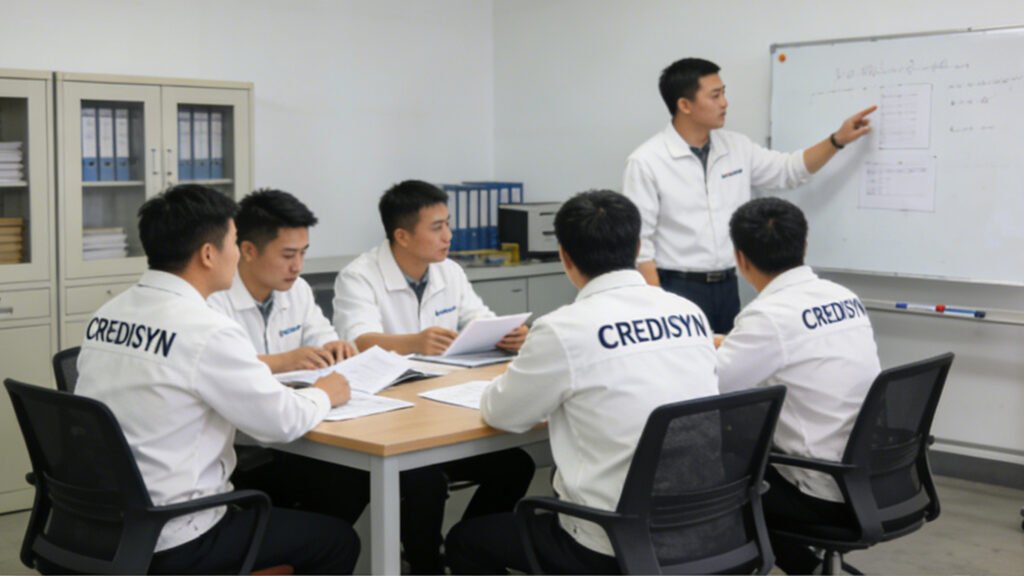
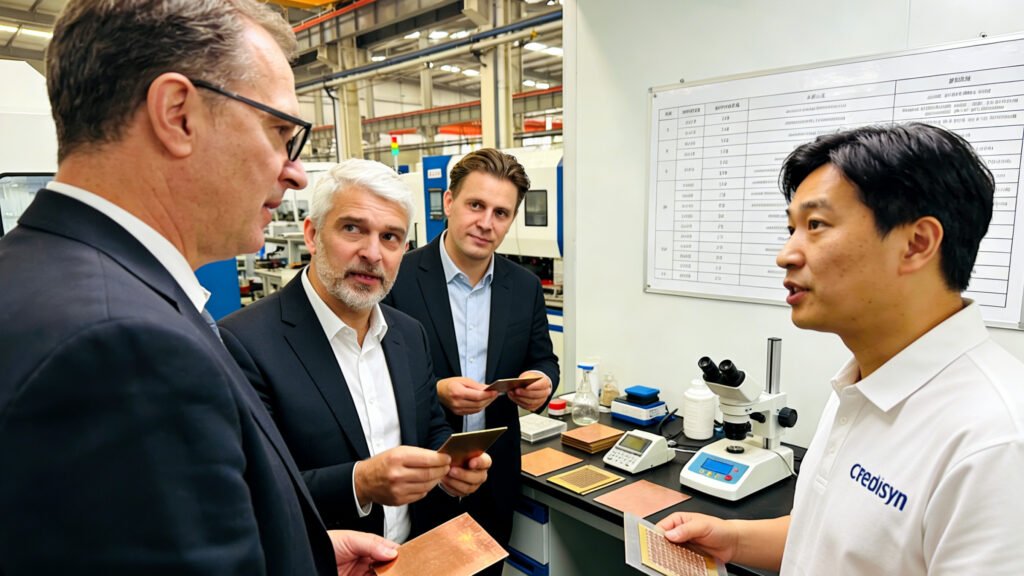
Credisyn Enhances CCL Quality with Zero-Defect Manufacturing
In the intricate ecosystem of electronics manufacturing, the Copper Clad Laminate (CCL) serves as the fundamental bedrock. It is the canvas upon which 5G networks are built, the nervous system of autonomous vehicles, and the backbone of AI data centers. Consequently, a microscopic defect in a laminate sheet—invisible to the naked eye—can cascade into catastrophic failures in billion-dollar systems.
At Credisyn, we recognize that quality is not merely a department; it is an engineering discipline. As the global demand for high-frequency, high-speed, and automotive-grade PCBs escalates, the tolerance for error approaches zero.
“Strengthening CCL Production Quality” is not just a slogan at Credisyn; it is a rigorous, data-driven operational overhaul involving Industry 4.0 monitoring, advanced chemical analysis, and strict supply chain management. This article details the comprehensive measures Credisyn has implemented to elevate our manufacturing standards, ensuring that every sheet leaving our factory meets the exacting requirements of IPC-4101, UL, and IATF 16949.
1. The Foundation: Incoming Quality Control (IQC)
Quality begins before the raw materials even enter our production line. The primary constituents of a laminate—copper foil, glass fiber cloth, and epoxy resin—must interact perfectly during the lamination process. Any variance in these inputs can lead to warping, delamination, or impedance instability.
A. Copper Foil Metallurgy
Copper is the critical conductor. We source exclusively from Tier-1 foundries, but trust is validated through verification.
- Surface Profile Analysis: We utilize 3D Laser Scanning Microscopes to verify the surface roughness (Rz) of incoming copper. For our High-Speed Series, the Rz must be strictly below 2.0μm to mitigate the “Skin Effect” signal loss.
- Anti-Tarnish Evaluation: Copper oxidation is the enemy of adhesion. We perform rigorous humidity chamber testing on sample rolls to ensure the chromate/zinc anti-tarnish coating is uniform. A compromised coating can lead to “Pink Ring” defects during PCB acid etching.
- Tensile & Elongation: For automotive applications, we verify High Temperature Elongation (HTE) properties to ensure the copper can withstand thermal shock without cracking.
B. Glass Fabric Integrity
The E-glass cloth provides mechanical stability.
- Coupling Agent Verification: The glass filaments are coated with Silane to bond with the resin. We test the “Loss on Ignition” (LOI) and wettability of the fabric. If the resin cannot fully wet the glass bundles, it creates microscopic voids known as CAF (Conductive Anodic Filament) pathways, which can cause short circuits under high voltage.
- Tension Control: We inspect the warp and fill tension of the fabric rolls. Uneven tension leads to “bow and twist” in the final PCB, causing assembly failures for component placers.
C. Resin Reactivity
The chemical formulation is proprietary, but its consistency must be public.
- Viscosity & Gel Time: Every batch of resin and hardener undergoes rheological testing. We measure the viscosity curve to ensure the resin flows correctly during the pressing cycle—filling the gaps in the copper pattern without flowing out of the board entirely.
2. In-Process Quality Control (IPQC): The Manufacturing Core
Once materials are approved, they enter the Credisyn production floor. Here, we have implemented a “Gate-Keeper” system where materials cannot move to the next stage unless they pass automated quality checks.
Stage 1: Precision Varnish Mixing
The resin, solvents, curing agents, and fillers (such as Silica or Aluminum Hydroxide) are blended in temperature-controlled vessels.
- Automated Dosing: We use gravimetric dosing systems with an accuracy of ±0.05%. Manual weighing is eliminated to prevent human error.
- Filtration: The varnish is passed through multi-stage filtration (down to 5 microns) to remove any undissolved particles or agglomerates that could cause dielectric breakdown.
Stage 2: The Treater Line (Impregnation)
The glass fabric is dipped into the resin varnish and dried to form “Prepreg” (B-Stage material). This is the most critical variable in determining the final laminate thickness.
- Beta-Ray Scanning: Credisyn utilizes ongoing Beta-Ray non-contact thickness gauges. These sensors scan the moving web of prepreg continuously, adjusting the metering rollers in real-time. This ensures the Resin Content (RC%) is maintained within a tight tolerance of ±1%.
- Volatile Control: If the prepreg retains too much solvent, it will “explode” (delaminate) during soldering. We continuously monitor the volatility content, keeping it strictly below 0.75%.
Stage 3: Class 1000 Cleanroom Layup
Foreign Object Debris (FOD) is the leading cause of electrical shorts in high-density boards. A single dust particle or hair trapped between layers can bridge two copper tracks.
- The Environment: Our layup rooms are pressurized Class 1000 cleanrooms. Personnel pass through air showers, and all transport relies on Automated Guided Vehicles (AGVs) to reduce human traffic.
- Static Control: Static electricity attracts dust. We employ ionization bars and conductive flooring to neutralize static charges on the prepreg sheets, preventing them from acting like dust magnets.
Stage 4: Vacuum Lamination Press
The “books” of copper and prepreg are loaded into the hot press. This is where the chemistry happens.
- Vacuum Chambers: We pull a deep vacuum (< 10 Torr) before applying pressure. This evacuates any air trapped between the layers, ensuring a void-free dielectric.
- Thermal Profiling: The heating ramp rate (°C/min) determines the “Flow Window”—the time the resin stays liquid before hardening. Credisyn uses embedded thermocouples in dummy books to monitor the core temperature of the stack, ensuring every sheet sees the same thermal history.
3. The Credisyn Reliability Lab: Science Over Assumption
Manufacturing is only half the battle. Verification is the other half. Credisyn has invested over $5M in a state-of-the-art Reliability Testing Laboratory that mirrors the capabilities of third-party certification bodies. We test to IPC-TM-650 standards.
Thermal Analysis Suite
High-performance PCBs are subjected to extreme heat during lead-free soldering. We verify our materials can survive it.
- DSC (Differential Scanning Calorimetry): This measures the Glass Transition Temperature (Tg). For our CS-FR-170 High-Tg line, we verify the Tg exceeds 170°C. It also measures the “Degree of Cure” (Delta H); an under-cured board will be soft and chemically weak.
- TMA (Thermomechanical Analysis): This measures the Coefficient of Thermal Expansion (CTE), specifically in the Z-axis.
- Why it matters: As the board heats, it expands. The copper plated through-hole (PTH) does not expand as much. If the laminate expands too fast (High CTE), it pulls the copper apart, causing “Barrel Cracks” and open circuits. We ensure our Z-axis CTE is < 2.5% (50-260°C).
- TGA (Thermogravimetric Analysis): This measures the Decomposition Temperature (Td)—the point where the resin literally burns and loses weight. We mandate Td > 340°C for all high-reliability automotive grades.
Electrical Performance Testing
- Dielectric Constant (Dk) & Dissipation Factor (Df): For 5G applications, stability is key. We use Cavity Resonator methods to test Dk/Df at 10GHz and 28GHz. A shift in Dk can detune an antenna; a rise in Df causes signal loss.
- High Pot (Hi-Pot) & Breakdown Voltage: We subject our laminates to voltages exceeding 4000V/mil to test dielectric strength. This is crucial for our CS-AL Series (Aluminum Base) used in LED lighting and EV power modules.
Chemical & Environmental Stress
- Pressure Cooker Test (PCT): Samples are boiled in a pressurized vessel (121°C, 100% RH, 2 atm) for hours, then immediately dipped in solder. This “Thermal Shock” test reveals if the resin has absorbed moisture. If it delaminates (popcorn effect), the lot is rejected.
- CAF Testing: We place laminates under high voltage and high humidity for 1000+ hours to check for the growth of conductive filaments along the glass weave.
4. Digital Transformation: Industry 4.0 Traceability
In modern manufacturing, data is a quality tool. Credisyn has integrated a comprehensive Manufacturing Execution System (MES).
The Digital Twin
Every master roll of copper, every vat of resin, and every press cycle is logged digitally.
- QR Code Traceability: Every sheet of laminate shipped by Credisyn bears a unique QR code. By scanning this, a customer can access the Certificate of Analysis (COA) and trace the product back to the specific day, shift, and machine it was produced on.
- Real-Time Monitoring (SCADA): Our engineers monitor press pressures and temperatures in real-time. If a press deviates from the set profile by even 1%, an alarm triggers, and the process is automatically paused to prevent the production of non-conforming material.
Statistical Process Control (SPC)
We don’t just look for “Pass/Fail.” We look for trends. By applying SPC (Cpk/Ppk metrics) to key variables like thickness and copper peel strength, we can predict if a machine is drifting out of spec before it produces a bad board. We target a Cpk > 1.67 for all automotive-grade products, representing a defect rate of less than 1 part per million.
5. Specialized Quality for Automotive (IATF 16949)
The automotive sector requires a different tier of quality management. As an IATF 16949 certified manufacturer, Credisyn adheres to strict protocols for our EV and ADAS (Advanced Driver Assistance Systems) clients.
PPAP (Production Part Approval Process)
Before we ship a new material to an automotive customer, we submit a Level 3 PPAP. This includes:
- PFMEA (Process Failure Mode Effects Analysis): A systematic brainstorming of everything that could go wrong and the controls in place to stop it.
- Control Plan: A detailed document listing every inspection point in the factory.
- MSA (Measurement System Analysis): Verification that our lab equipment is calibrated and accurate (Gage R&R).
Zero Defect Mentality
In automotive, “good enough” is not acceptable. A failure in an ABS brake controller or a Battery Management System (BMS) can be fatal. Credisyn empowers every operator with “Stop Work Authority”—if they see a potential quality risk, they are authorized to halt the production line immediately without fear of reprimand.
6. Case Study: Solving the “Black Pad” Mystery
To illustrate our commitment to quality, we highlight a recent success story involving a major telecommunications client.
The Challenge: The client was experiencing “Black Pad” defects during ENIG (Electroless Nickel Immersion Gold) plating on their PCBs. The nickel was corroding, leading to brittle solder joints. They suspected the issue lay with the PCB fabricator, but root cause analysis pointed deeper.
The Investigation: Credisyn’s “Rapid Response Team” analyzed the base laminate. We discovered that the resin system had a slightly too high “Cure Degree” entering the customer’s process. The resin was so chemically inert that the desmear chemicals at the PCB factory were overly aggressive in trying to roughen it, leaving micropores that trapped plating chemistry.
The Solution: We adjusted the “Gel Time” and catalyst ratio in our varnish formulation to optimize the resin’s chemical resistance specifically for ENIG processing.
- Result: The customer’s Black Pad defect rate dropped to zero.
- Lesson: Quality is not just about meeting a datasheet spec; it is about understanding how the material behaves in the customer’s process.
7. Environmental Quality: RoHS, REACH, and UL
Credisyn’s definition of quality extends to environmental safety.
- UL Certification: Our materials are certified by Underwriters Laboratories for Flammability (V-0) and Relative Thermal Index (RTI). We undergo quarterly unannounced audits by UL representatives to ensure ongoing compliance.
- RoHS 3 & REACH: We strictly control our supply chain to ensure no hazardous substances (like Lead, Mercury, or PBBs) enter our facility. We maintain an up-to-date database of SVHC (Substances of Very High Concern) to comply with EU regulations.
- Halogen-Free Purity: For our Green Product line (CS-HF Series), we use ion chromatography to verify that Chlorine and Bromine levels are below 900ppm, ensuring the material is truly eco-friendly.
Conclusion: The Credisyn Promise
In an industry often driven by cost reduction, Credisyn has chosen to drive by value. We understand that the cost of a laminate is negligible compared to the cost of a field failure.
By integrating rigorous Incoming Quality Control, Class 1000 manufacturing environments, advanced IPC-TM-650 laboratory testing, and full Industry 4.0 traceability, we have built a fortress of quality. Whether you are building a consumer gadget or a life-critical medical device, when you choose Credisyn, you are choosing a partner dedicated to the integrity of your signal, the management of your thermal load, and the reputation of your brand.
Credisyn: Where Chemistry Meets Quality.
FAQ: Credisyn Quality Standards
Q: What certifications does Credisyn hold? A: Credisyn is certified to ISO 9001:2015 (Quality Management), IATF 16949:2016 (Automotive Quality), ISO 14001 (Environmental), and QC 080000 (Hazardous Substance Process Management). Our products hold UL 94 V-0 flammability ratings.
Q: How do you handle lot-to-lot consistency? A: We use a “Smart Recipe” management system in our varnish mixing and fixed raw material sources. We also utilize statistical process control (SPC) to monitor key variables like Tg and Thickness, ensuring the distribution curve remains narrow and centered.
Q: Can Credisyn provide COA (Certificate of Analysis) with every shipment? A: Yes. A digital COA is generated automatically for every lot, detailing the specific test results for Thickness, Peel Strength, Solder Float, and Tg, accessible via the QR code on the packaging or direct email.
Q: What is your standard for thickness tolerance? A: For rigid cores, we generally follow IPC-4101 Class C/M tolerances. For specialized applications, we can offer tighter tolerances (e.g., ±0.025mm) upon request by utilizing selected prepreg glass styles and precision pressing profiles.
Q: How do you ensure foreign material doesn’t get into the laminate? A: We utilize a Class 1000 cleanroom for all layup operations, require full cleanroom bunny suits for operators, use tacky rollers/web cleaners on automatic lines, and maintain positive air pressure in the layup area to push dust out.
Paper core copper-clad substrate
Glass cloth copper-clad substrate
Cloth paper composite copper-clad substrate
Cloth felt composite copper-clad substrate
Paper core copper-clad substrate
Glass cloth copper-clad substrate
Cloth paper composite copper-clad substrate
Cloth felt composite copper-clad substrate
Credisyn quality copper clad laminates for global electronics
Credisyn-Professional CCL manufacturer, delivering reliable electronic substrate solutions worldwide.
Quick Link
Email: info@credisyn.com
Quick Link
Add: No. 18 Hong Kong Middle Road, Qingdao, China
Copyright © 2025 Website Title Copper Cladd Laminated Supported by Credisyn technology