
Menu
latest blog
Lorem ipsum dolor sit amet, consectetur adipiscing elit. Ut elit tellus, luctus nec ullamcorper mattis, pulvinar dapibus leo.

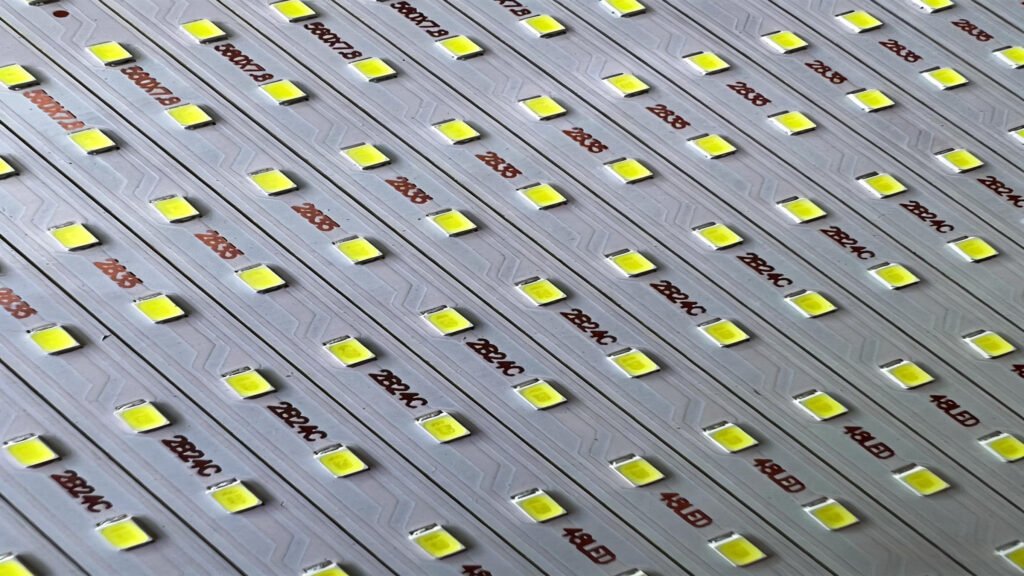
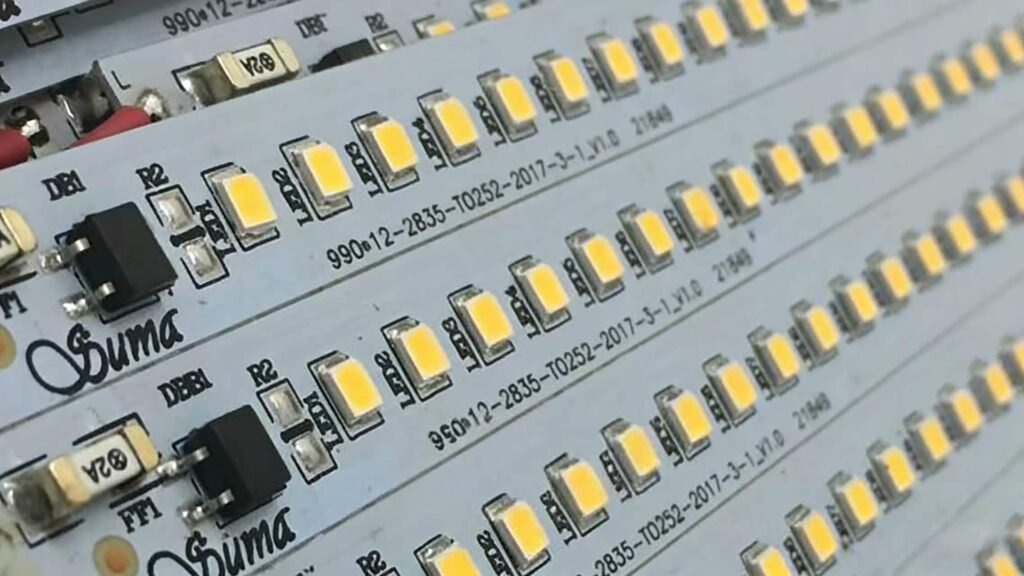
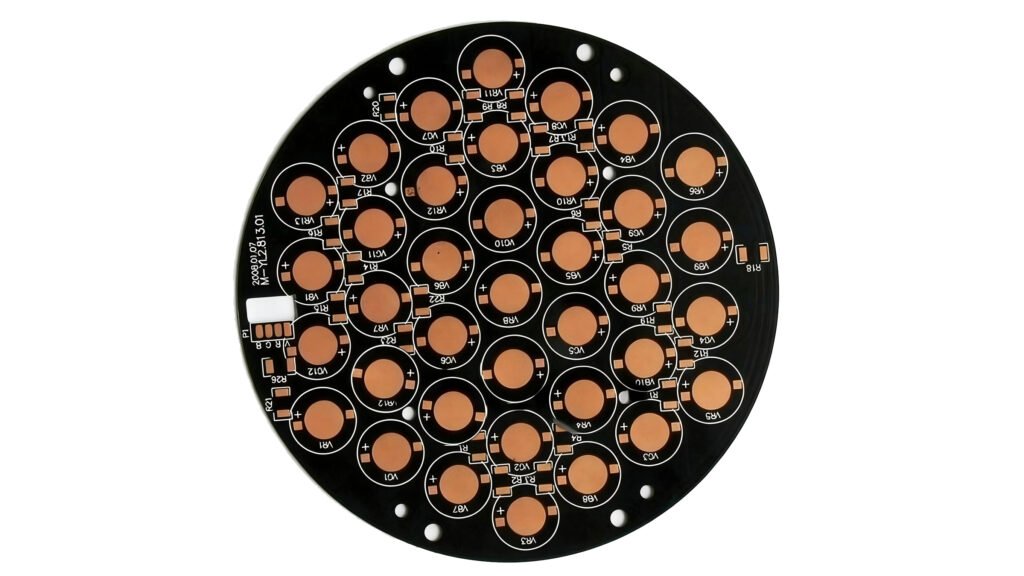
Copper Clad Laminate for LED Lighting: Guide to Thermal Management
In the modern electronics landscape, Light Emitting Diodes (LEDs) have revolutionized illumination. From smartphone backlights to high-intensity streetlights, LEDs are everywhere. However, the performance and lifespan of an LED are not solely determined by the diode itself. The unsung hero is the substrate it sits on: Copper Clad Laminate (CCL).
At Credisyn, a leading manufacturer of high-performance copper-clad laminates, we recognize that LED lighting fundamentally revolves around heat management. This article serves as a detailed guide to Copper Clad Laminates for LED applications, covering material science, thermal conductivity, manufacturing processes, and real-world case studies demonstrating the critical importance of material selection.
Part 1: The Thermal Challenge in LED Lighting
Understanding the physics of LEDs highlights why special CCL is necessary. Unlike incandescent bulbs that emit heat primarily as infrared energy, LEDs produce “cold” light. However, the conversion of electricity into light is not 100% efficient; a significant portion (often 60-70%) is converted into heat at the P-N junction. If this heat is not dissipated effectively, it can lead to:
- Luminous Decay: A significant drop in light output (lumen depreciation).
- Color Shift: Changes in color temperature as the emission wavelength alters.
- Catastrophic Failure: Components can fail due to excessive temperatures, leading to malfunctions.
The Printed Circuit Board (PCB) acts as the primary heat-sink path, with the Copper Clad Laminate serving as the thermal bridge.
The Role of Credisyn in Thermal Management
Credisyn engineers laminates to minimize Thermal Resistance (Rth). Whether utilizing standard FR-4 for low-power indicators or high-performance Aluminum base laminates for automotive headlights, our materials efficiently channel heat away from the LED chip to the heatsink.
Part 2: Types of Copper Clad Laminates for LED Applications
Different LEDs require different substrates based on power density (Watts per square centimeter) and the operational environment.
- FR-4: The Standard Solution
- Material: Composed of woven glass epoxy resin.
- Pros: Cost-effective, excellent electrical insulation, mature manufacturing process.
- Cons: Poor thermal conductivity (typically 0.25 – 0.3 W/m·k).
- Use Cases: Suitable for low-power LEDs like decorative lighting and signal indicators.
- CEM-3: The Cost-Effective Alternative
- Material: Utilizes a non-woven glass felt core.
- Pros: Slightly better punchability, similar thermal performance to FR-4.
- Use Cases: Suitable for basic LED applications requiring good light reflection.
- Aluminum-Base CCL (IMS): The Industry Standard
- Structure:
- Circuit Layer: Copper foil (1oz to 3oz).
- Dielectric Layer: Thermally conductive yet electrically insulating polymer.
- Base Layer: Aluminum plate that spreads heat and provides mechanical rigidity.
- Use Cases: High-power LED lighting, suitable for challenging thermal environments.
- Structure:
- Copper-Base CCL
- Material: Uses copper as the base metal instead of aluminum.
- Pros: Exceptional thermal conductivity (~400 W/m·k).
- Cons: Heavier and more expensive than aluminum.
- Use Cases: Extreme high-power applications like UV curing LEDs.
Part 3: Deep Dive into the Dielectric Layer
The dielectric layer’s quality is crucial, as it must simultaneously:
- Insulate Electricity: Prevent short circuits between copper and aluminum.
- Conduct Heat: Enable efficient heat transfer from copper to aluminum.
The Credisyn Formulation
Our R&D team has developed proprietary resin formulations infused with ceramic fillers (e.g., Alumina or Boron Nitride).
- Standard Series: 1.0 W/m·k to 1.5 W/m·k (for general lighting).
- High-Performance Series: 2.0 W/m·k to 3.0 W/m·k (ideal for street lights and industrial applications).
- Ultra-Thermal Series: 4.0 W/m·k to 8.0 W/m·k (for automotive headlamps and high-density applications).
Why This Matters
A generic competitor may offer a “2.0 W/m·k” laminate, but if the dielectric is too thick, the total thermal impedance can be high. Credisyn optimizes thickness (typically 75μm to 150μm) to balance high breakdown voltage and thermal transfer.
Part 4: Key Performance Indicators for Buying LED CCL
When selecting materials for LED projects, consider the following metrics, which Credisyn provides in detailed datasheets:
- Thermal Conductivity (W/m·k)
- Indicates the material’s heat conduction ability. Credisyn quotes system values based on ASTM D5470 standards.
- Breakdown Voltage (Hi-Pot)
- CCL must withstand high voltages (up to 6000V AC). Credisyn’s Aluminum CCL typically allows for safe operation, ensuring UL compliance.
- Peel Strength
- Thermal cycling causes stress; high peel strength (greater than 1.2 N/mm) ensures the copper foil remains attached.
- Dimensional Stability
- The CTE of the dielectric must match that of aluminum and copper to prevent warping or delamination during soldering.
Part 5: Manufacturing Excellence at Credisyn
Producing Copper Clad Laminate for LED lighting requires precise processes.
Step 1: Surface Treatment
The aluminum plate undergoes anodization or chemical treatment to ensure a strong bond with the dielectric resin.
Step 2: Coating and Impregnation
For Aluminum CCL, we use “Comma Coating” or “Slot Die Coating” technology to apply the ceramic-filled resin, ensuring no air bubbles form.
Step 3: High-Temperature Lamination
The layered stack (Aluminum + Resin + Copper) is pressed under high heat and vacuum to eliminate volatiles while curing the resin.
Step 4: Quality Control
Quality checks include:
- X-Ray Inspection: To verify internal voids.
- Thermal Impedance Testing: To confirm heat transfer efficiency.
Part 6: Case Studies – Credisyn Material in Action
Here are three anonymized case studies showcasing our products:
Case Study A: Smart City Streetlight Project
- Challenge: A European manufacturer needed a durable PCB material for smart streetlights operating in temperature extremes.
- Solution: We provided our CS-AL-2000 Series (2.0 W/m·k) Aluminum base laminate.
- Result: Zero failures after 10,000 hours of accelerated testing, securing a government contract.
Case Study B: Automotive Headlamp “Matrix LED”
- Challenge: An automotive supplier faced excessive junction temperatures.
- Solution: We recommended our CS-AL-4000 Ultra (4.0 W/m·k) with a thinner dielectric layer.
- Result: Junction temperatures dropped by 18°C, within safe margins.
Case Study C: Horticultural Lighting
- Challenge: A grow light manufacturer needed cost-effective thermal management.
- Solution: A hybrid construction with a CEM-3 laminate and high-thermal-conductivity filler.
- Result: 30% cost savings compared to Aluminum CCL, while significantly improving thermal performance.
Part 7: Emerging Trends in LED and CCL Technology
The lighting industry is rapidly evolving, and so is Credisyn:
- Mini-LED and Micro-LED: As technology advances, we are developing high-glass-transition materials for ultra-fine traces.
- UV-C LEDs: Researching inorganic dielectric layers resistant to UV degradation.
- CSP (Chip Scale Package) Direct Bonding: Optimizing for extreme flatness and surface roughness to facilitate direct bonding.
Part 8: Why Choose Credisyn for Your LED Projects?
In a crowded market, Credisyn stands apart as a dedicated manufacturer.
- Direct Factory Production: Control over formulation and quality ensures reliability.
- Customization: Tailored solutions per your specifications.
- Scalability: Capacity for both prototypes and full-volume production.
- Certification: Our materials are UL recognized and compliant with RoHS and REACH.
Conclusion
The shift to LED lighting represents a monumental leap in energy efficiency, but the success of any LED system hinges on effective thermal management. The Copper Clad Laminate is the foundation of that thermal management system.
Choosing the wrong laminate can lead to costly failures and damage to your brand. Choosing the right laminate, backed by Credisyn’s expertise, ensures durability, brightness, and performance.
Contact Credisyn Today
Are you encountering thermal challenges in your PCB design? Reach out to our engineering team for a free material consultation and sample kit. Let us help you select the perfect Copper Clad Laminate for your LED application.
Frequently Asked Questions (FAQ)
Q1: What is the difference between FR-4 and Aluminum Base CCL for LEDs?
A: FR-4 is suitable for low-power LEDs with thermal conductivity (~0.3 W/m·k), while Aluminum Base CCL is essential for high-power applications, offering thermal conductivity ranging from 1.0 to 8.0 W/m·k.
A: FR-4 is suitable for low-power LEDs with thermal conductivity (~0.3 W/m·k), while Aluminum Base CCL is essential for high-power applications, offering thermal conductivity ranging from 1.0 to 8.0 W/m·k.
Q2: Can I use FR-4 for 1-Watt LEDs?
A: It’s risky. While it’s possible, an Aluminum Base CCL is generally more efficient and reliable for LEDs ≥1 Watt.
A: It’s risky. While it’s possible, an Aluminum Base CCL is generally more efficient and reliable for LEDs ≥1 Watt.
Q3: What does W/m·k mean?
A: It signifies thermal conductivity. Higher values indicate better heat transfer away from the LED chip.
A: It signifies thermal conductivity. Higher values indicate better heat transfer away from the LED chip.
Q4: Does Credisyn produce the finished PCB or just the material?
A: Credisyn manufactures Copper Clad Laminate. We supply this material to PCB fabrication houses, but we can recommend partners for a turnkey solution.
A: Credisyn manufactures Copper Clad Laminate. We supply this material to PCB fabrication houses, but we can recommend partners for a turnkey solution.
Q5: What is the standard thickness of Aluminum in your CCL?
A: Common thicknesses range from 1.0mm to 2.0mm, though custom thicknesses from 0.6mm to 3.0mm can be produced depending on requirements.
A: Common thicknesses range from 1.0mm to 2.0mm, though custom thicknesses from 0.6mm to 3.0mm can be produced depending on requirements.
Paper core copper-clad substrate
Glass cloth copper-clad substrate
Cloth paper composite copper-clad substrate
Cloth felt composite copper-clad substrate
Paper core copper-clad substrate
Glass cloth copper-clad substrate
Cloth paper composite copper-clad substrate
Cloth felt composite copper-clad substrate
Credisyn quality copper clad laminates for global electronics
Credisyn-Professional CCL manufacturer, delivering reliable electronic substrate solutions worldwide.
Quick Link
Email: info@darkblue-cassowary-242734.hostingersite.com
Quick Link
Add: No. 18 Hong Kong Middle Road, Qingdao, China
Copyright © 2025 Website Title Copper Cladd Laminated Supported by Credisyn technology