
Menu
latest blog
Lorem ipsum dolor sit amet, consectetur adipiscing elit. Ut elit tellus, luctus nec ullamcorper mattis, pulvinar dapibus leo.

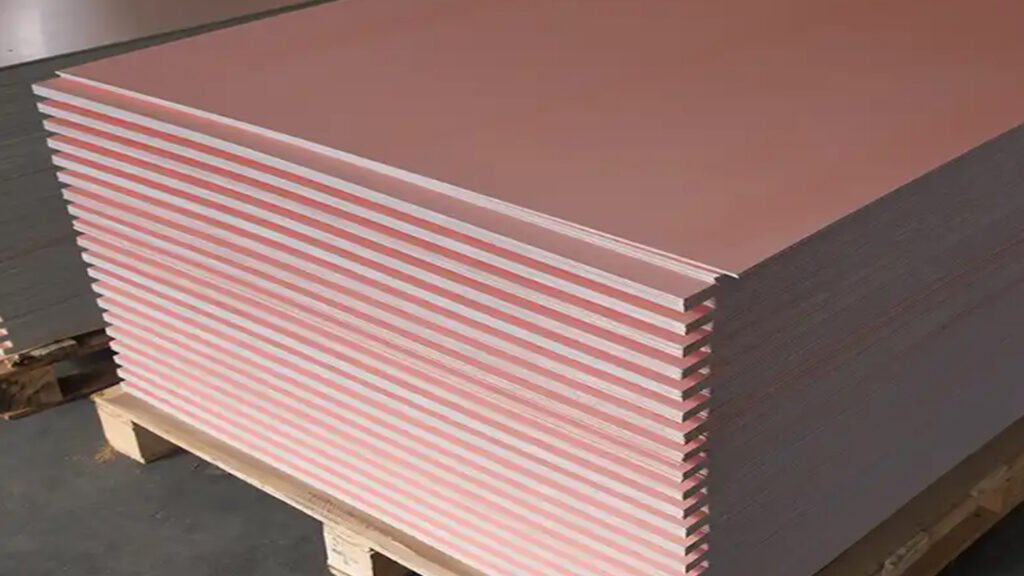
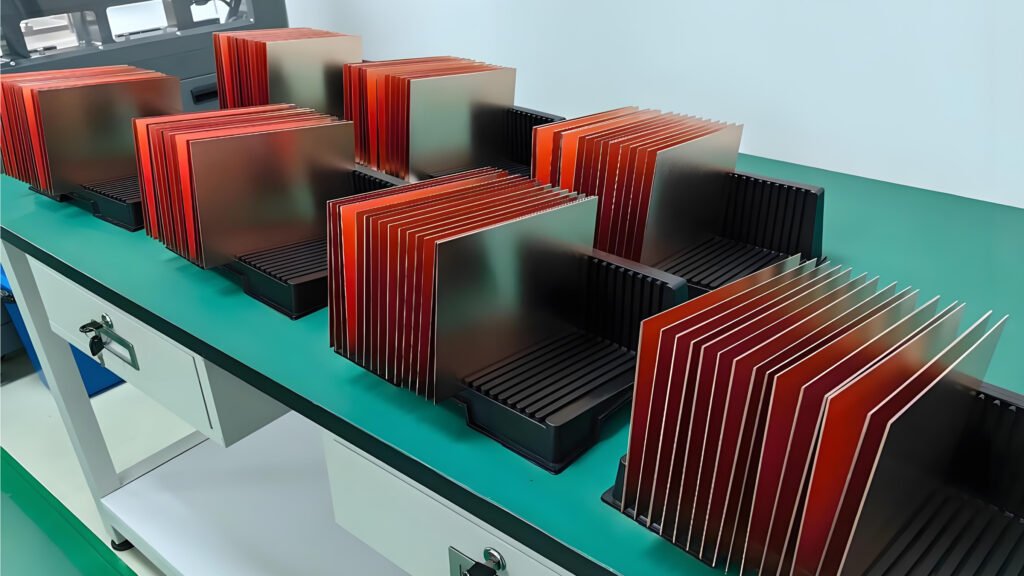
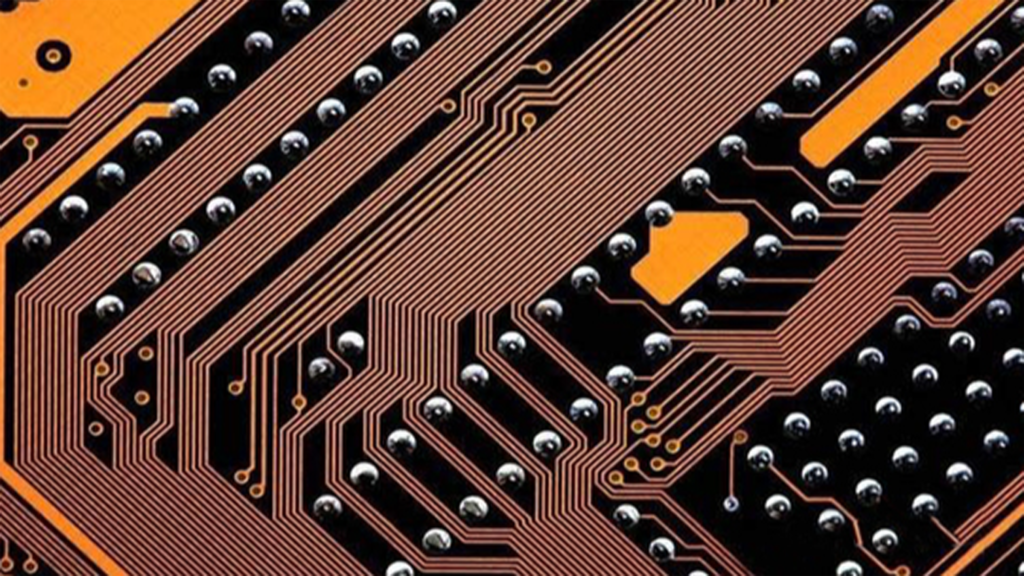
Credisyn Advances PCB Lamination Tech: Pioneering Interconnects Future
The printed circuit board (PCB) is no longer just a support structure for electronic components; it is an active component in the circuit design itself. As frequencies climb into the millimeter-wave spectrum (mmWave) for 6G and power densities in Electric Vehicles (EVs) soar, the Copper Clad Laminate (CCL) must evolve from a passive insulator into a high-performance material system.
At Credisyn, “advancing technology” is not merely about refining existing manufacturing processes—it is about rewriting the rules of material science. We are transitioning from the era of standard FR-4 epoxy systems to an era of hybrid resin chemistries, nano-ceramic fillers, and hyper-very-low-profile (HVLP) metallurgy.
This article explores how Credisyn is pushing the boundaries of physics and chemistry to create the next generation of PCB materials. We will delve into the technical advancements in signal integrity, thermal thermodynamics, and mechanical reliability that are defining the future of the electronics industry.
1. The Signal Integrity Revolution: Breaking the Frequency Barrier
The most significant driver of CCL innovation is the demand for speed. With the advent of AI Data Centers requiring PCIe Gen 6.0 speeds and Telecom infrastructure moving toward 6G, the laminate must minimize signal loss. Standard FR-4, with a Dissipation Factor (Df) of ~0.02, acts like a sponge, absorbing high-frequency signals and converting them into heat.
A. Resin Chemistry Evolution: From Epoxy to PPO/PPE
Credisyn has advanced beyond traditional dicyandiamide-cured epoxies. To achieve Ultra-Low Loss performance (Df < 0.005 @ 10GHz), we have developed proprietary resin systems based on Polyphenylene Oxide (PPO) and Cyanate Ester.
- The Polarizability Challenge: Traditional epoxy molecules are highly polar, which means they vibrate intensely under high-frequency electromagnetic fields, causing signal loss. Credisyn’s modified PPO networks are non-polar, significantly reducing dipole movement.
- Moisture Hydrophobicity: Water has a high Dielectric Constant (Dk ~80). Even microscopic moisture absorption can ruin a PCB’s impedance. Our advanced resin systems feature a tight cross-linking density that repels water molecules, maintaining stable electrical performance even in humid environments.
B. The Skin Effect and Copper Morphology
As frequencies increase, the electrical current travels closer to the surface of the copper conductor—a phenomenon known as the “Skin Effect.” If the copper surface is rough (to aid mechanical bonding), the signal must travel over “peaks and valleys,” increasing the path length and resistance.
- HVLP Technology: Credisyn has integrated Hyper Very Low Profile (HVLP) copper foil into our high-speed laminates. Standard copper has a roughness (Rz) of 5-10μm. Our HVLP foil features an Rz < 1.5μm.
- Chemical Bonding: The challenge with smooth copper is adhesion. How do you stick resin to a mirror? Credisyn solves this with advanced Silane coupling agents and chemical micro-roughening treatments that create a chemical bond rather than a mechanical lock, ensuring high peel strength (> 0.8 N/mm) without compromising signal integrity.
C. Addressing Fiber Weave Skew
A standard laminate is reinforced with woven glass fabric. However, the glass bundles and the resin gaps have different Dielectric Constants (Dk ~6.0 for glass vs. ~3.0 for resin). If a high-speed differential pair runs over a “knuckle” of glass on one side and a resin gap on the other, the signals travel at different speeds, causing timing skew.
- Credisyn Flat-Glass Solution: We utilize spread-glass fabrics (1067, 1078, 1086 styles) where the glass filaments are mechanically flattened to minimize the resin-rich gaps. This creates a homogeneous dielectric environment, effectively eliminating Fiber Weave Skew for data rates exceeding 25 Gbps.
2. Thermal Management: The “Cooling” Laminate
As electronic devices shrink and power outputs rise (especially in automotive LEDs and EV inverters), heat flux becomes the enemy. Standard FR-4 acts as a thermal blanket (0.3 W/m·k), trapping heat. Credisyn advances PCB laminated technology by turning the dielectric into a thermal bridge.
A. The Thermal-Electrical Paradox
The holy grail of CCL engineering is a material that is electrically insulating (prevents short circuits) but thermally conductive (dissipates heat). Usually, materials that conduct heat (like metal) also conduct electricity.
- Nano-Ceramic Fillers: Credisyn utilizes a hybrid filler system employing Alumina (Al2O3) and Boron Nitride (BN).
- Why Boron Nitride? BN is unique; it has a crystalline structure similar to graphite (conducting heat efficiently) but creates a wide bandgap that blocks electron flow.
- Particle Distribution: We use a multimodal particle size distribution (mixing large and small particles). The small particles fill the voids between the large ones, creating a continuous “thermal pathway” through the resin matrix. This allows our CS-AL Series to achieve thermal conductivities ranging from 2.0 W/m·k to 8.0 W/m·k, vastly outperforming standard dielectrics.
B. Metal Base Substrates (IMS)
For applications requiring rapid heat dissipation, such as Matrix LED Headlights, we bond the laminate directly to a metal core.
- Alloy Selection: We offer tailored metal bases including Aluminum 5052 (high tensile strength for vibration resistance) and Aluminum 6061 (high corrosion resistance). For extreme power applications, we offer C1100 Copper Base laminates.
- Dielectric Breakdown Voltage: While making the layer thin improves thermal transfer, it risks electrical breakdown. Credisyn advances this technology by optimizing the resin density to withstand >6000V AC breakdown voltage even at thicknesses as low as 100μm.
3. Structural Integrity: High-Tg and Low-CTE Innovations
A laminate must survive the harsh environment of PCB assembly (reflow soldering at 260°C) and the operating environment of the end product.
A. Z-Axis Expansion Control
The most common failure in multilayer PCBs is the “Barrel Crack.” As the board heats up, the resin expands in the Z-axis (thickness). The copper plating in the via hole expands much less. If the resin expands too much, it pulls the copper apart.
- Low-CTE Technology: Credisyn advances reliability by loading our CS-FR-170 and High-Speed series with silica fillers that have a near-zero Coefficient of Thermal Expansion (CTE).
- Tg Optimization: By raising the Glass Transition Temperature (Tg) to >170°C (High-Tg) or even >200°C (Super High-Tg), we delay the onset of rapid expansion. This ensures the Z-axis expansion remains under 2.5% (from 50°C to 260°C), protecting the integrity of blind and buried vias.
B. Anti-CAF (Conductive Anodic Filament) Capability
In automotive and industrial environments, high voltage combined with humidity can cause copper salts to migrate along the glass fibers, creating an internal short circuit (CAF).
- Acid-Resistant Glass Interface: Credisyn treats the glass fabric with specialized coupling agents that are hydrophobic and acid-resistant. This strengthens the bond between the resin and the glass, leaving no microscopic capillary paths for the electrochemical migration to occur. Our materials pass 1000 hours of CAF testing at 100V DC/85°C/85% RH.
4. Miniaturization and HDI (High Density Interconnect)
As devices like smartphones and wearables become more compact, the PCB traces and vias must shrink. Credisyn advances PCB laminated technology to support HDI and IC Substrate manufacturing.
A. Ultra-Thin Dielectrics
Traditional prepregs are often limited to 50μm thickness. Credisyn is pushing the limit down to 25μm (approx. 1 mil).
- Handling & Stability: Producing such thin materials is difficult; they are prone to wrinkling. We utilize advanced V-Stage (vertical) drying towers with precision tension control systems (< 0.5N variance) to produce wrinkle-free, ultra-thin prepregs suitable for “Any-Layer” HDI builds.
B. Dimensional Stability
In HDI, registration is critical. If the core material shrinks or stretches during lamination, the laser drill will miss the target pad.
- Stress-Relieved Manufacturing: Credisyn employs a specialized annealing process for our cores. By relieving the internal stress of the woven glass and copper before it reaches the customer, we ensure dimensional stability of < 0.03%. This allows PCB fabricators to stack 12+ layers with perfect alignment.
C. Laser Drillability
Micro-vias are drilled using UV or CO2 lasers. Standard glass fabrics can deflect the laser beam or leave jagged hole walls.
- LDP (Laser Drillable Prepreg): We utilize specific glass styles (like 1017 or 1027) with finer filaments and optimized resin absorption. This ensures the laser ablates the material cleanly and uniformly, allowing for high-quality plating of micro-vias.
5. Green Manufacturing: Sustainable Material Science
Advancing technology also means advancing responsibility. Credisyn is leading the shift toward environmentally sustainable laminates without compromising performance.
A. Halogen-Free Flame Retardancy
Traditional FR-4 relies on Bromine for flame retardancy. However, when burned, bromine releases toxic dioxins.
- Phosphorus-Nitrogen Synergy: Credisyn’s CS-HF Series utilizes a synergistic blend of Phosphorus and Nitrogen compounds. These form a robust “char layer” upon combustion, cutting off oxygen and extinguishing the flame (UL 94 V-0) without using halogens.
- Bio-Based Resins: Our R&D department is currently piloting resins derived from renewable biomass sources, aiming to reduce the carbon footprint of the raw material by up to 30% while maintaining thermal stability.
6. Manufacturing Process Innovation: Industry 4.0
Credisyn’s technological advancements are not limited to the product; they extend to the production method. We are implementing “Smart Factory” principles to ensure consistency.
A. Automatic Optical Inspection (AOI) for Prepreg
Historically, inspecting prepreg for defects (gel particles, insects, hair) was done manually. Credisyn has integrated wide-format AOI scanners on our treater lines.
- Machine Vision: These cameras scan the moving web at high speeds, detecting defects as small as 0.1mm. The system automatically marks the defective section on the roll map, ensuring it is removed before reaching the customer.
B. Vacuum Press Analytics
Our hydraulic presses are connected to a central data cloud. We analyze the pressure and temperature curves of every cycle.
- Predictive Maintenance: AI algorithms analyze the data to predict if a heating platen is developing a “cold spot” or if a vacuum pump is losing efficiency. This allows us to perform maintenance proactively, preventing batch failures.
7. Case Study: Enabling Next-Gen AI Computing
To illustrate the impact of Credisyn’s advancements, consider a recent partnership with a leading server manufacturer.
The Challenge: The client was designing a 24-layer motherboard for an AI training cluster. The board generated immense heat (350W per CPU) and required signal speeds of 112 Gbps (PAM4). Standard High-Tg materials were failing due to excessive signal loss, and standard Low-Loss materials couldn’t handle the thermal mechanical stress.
The Credisyn Solution: We deployed a hybrid build using our CS-HighSpeed-Extreme series.
- Core Technology: We used a PPO-based resin system with Df 0.003 to handle the 112 Gbps signals.
- Thermal Reinforcement: To handle the heat, we customized the filler content to increase thermal conductivity to 0.8 W/m·k (double the standard).
- Mechanical Stability: We utilized HVLP copper with a proprietary “reverse treatment” to maximize adhesion without increasing roughness.
The Result: The client achieved a 15% reduction in signal attenuation and passed 1000 cycles of thermal shock testing (-55°C to +125°C) with zero via failures. This enabled them to launch their new server platform ahead of schedule.
8. Future Outlook: Beyond 5G and into 6G
As we look toward the horizon, Credisyn is already preparing for the requirements of 6G technology, which will operate in the sub-Terahertz range (100GHz+).
- Dk < 2.0 Target: At these frequencies, even standard Low-Loss materials are too “slow.” We are experimenting with Fluoropolymer (PTFE) hybrid blends and porous silica fillers to drive the Dielectric Constant below 2.0.
- Glass-Free Laminates: To eliminate the fiber weave effect entirely for 6G, we are researching film-based reinforcement systems that provide mechanical strength without the woven glass structure.
Conclusion
“Credisyn Advances PCB Laminated Technology” is a narrative of relentless improvement. We are bridging the gap between theoretical physics and mass production.
By mastering the chemistry of Low-Loss Resins, innovating with Nano-Thermal Fillers, and perfecting the Mechanical Reliability of our laminates, Credisyn is empowering engineers to design without limits. Whether it is the safety of an autonomous vehicle, the speed of a 5G network, or the efficiency of a green energy grid, Credisyn materials are the hidden foundation of the future.
We invite PCB fabricators and OEMs to partner with us. Let us navigate the complex trade-offs of Dk, Df, Tg, and CTE together, ensuring that your next-generation product is built on a material that is as advanced as the technology it supports.
FAQ: Technology & Innovation
Q: What is the difference between standard FR-4 and Credisyn’s High-Speed Laminates? A: Standard FR-4 uses epoxy resin with a Dissipation Factor (Df) of ~0.02, causing high signal loss at frequencies >1GHz. Credisyn’s High-Speed laminates use PPO or Cyanate Ester resins with Df <0.005, preserving signal integrity for 5G and AI applications.
Q: How does Credisyn improve thermal conductivity in laminates? A: We incorporate specialized ceramic fillers, such as Alumina and Boron Nitride, into the resin matrix. These fillers conduct heat while remaining electrically insulating, raising thermal conductivity from the standard 0.3 W/m·k to over 2.0 W/m·k (and up to 8.0 W/m·k for metal-base).
Q: What is “HVLP” Copper and why is it used? A: HVLP stands for Hyper Very Low Profile copper. It has an extremely smooth surface (roughness < 1.5μm). It is used in high-frequency PCBs to reduce the “Skin Effect,” where rough copper surfaces cause signal resistance and loss at high speeds.
Q: Can Credisyn materials handle Lead-Free Soldering? A: Yes. All our primary laminates are “Lead-Free Compatible,” featuring a Decomposition Temperature (Td) > 340°C and a Time to Delamination (T260/T288) exceeding 60 minutes, ensuring they survive the 260°C reflow temperatures.
Q: What is the benefit of “Flat Glass” fabric? A: Flat Glass fabric reduces the size of the “knuckles” in the weave and minimizes resin-rich pockets. This creates a more uniform dielectric environment, preventing “Fiber Weave Skew” where differential signals travel at different speeds.
Q: Is Credisyn working on materials for 6G? A: Yes, our R&D team is actively developing ultra-low Dk/Df materials for the sub-Terahertz spectrum, exploring PTFE hybrids and novel filler technologies to meet the demands of 6G communication.
Paper core copper-clad substrate
Glass cloth copper-clad substrate
Cloth paper composite copper-clad substrate
Cloth felt composite copper-clad substrate
Paper core copper-clad substrate
Glass cloth copper-clad substrate
Cloth paper composite copper-clad substrate
Cloth felt composite copper-clad substrate
Credisyn quality copper clad laminates for global electronics
Credisyn-Professional CCL manufacturer, delivering reliable electronic substrate solutions worldwide.
Quick Link
Email: info@credisyn.com
Quick Link
Add: No. 18 Hong Kong Middle Road, Qingdao, China
Copyright © 2025 Website Title Copper Cladd Laminated Supported by Credisyn technology