
Menu
latest blog
Lorem ipsum dolor sit amet, consectetur adipiscing elit. Ut elit tellus, luctus nec ullamcorper mattis, pulvinar dapibus leo.

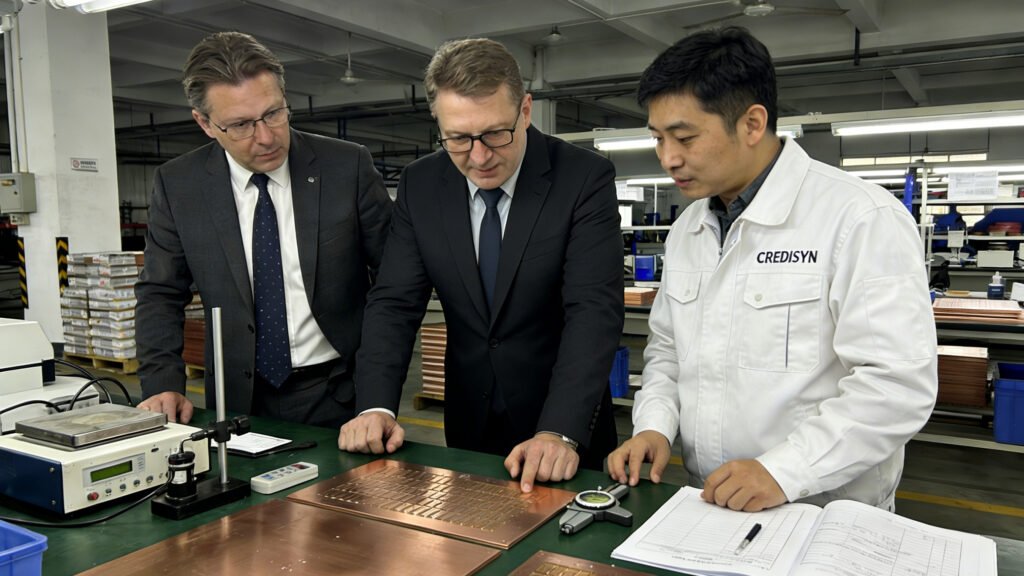
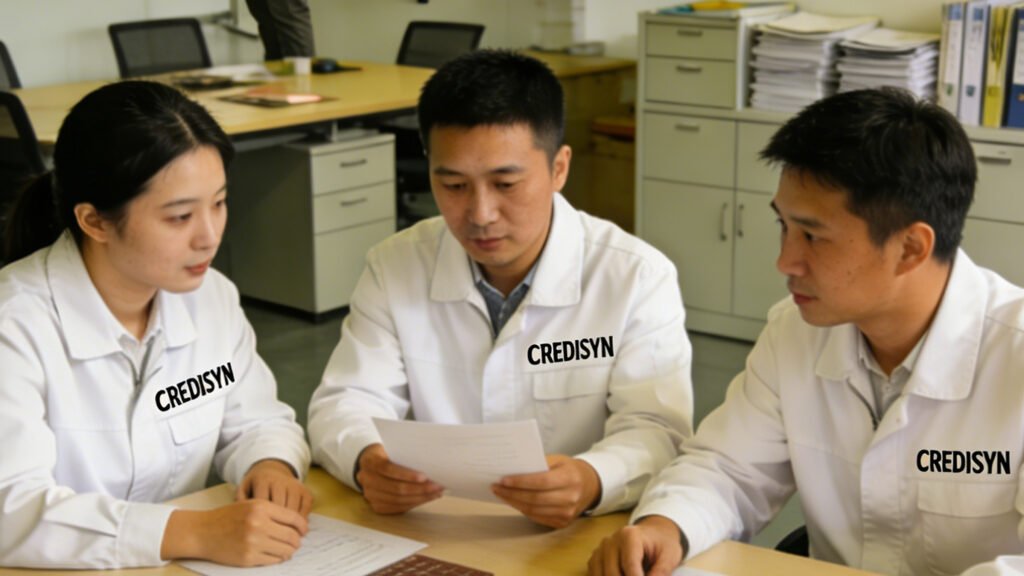
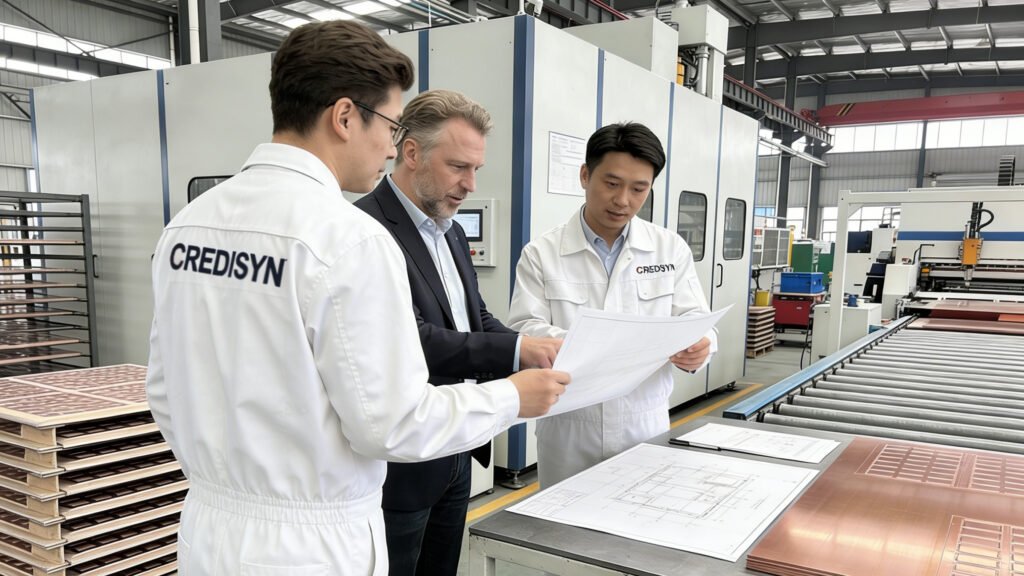
Credisyn Launches High-Quality FR-4 Panels: Redefining PCB Reliability
In the global electronics manufacturing industry, FR-4 is the ubiquitous standard. It is the backbone of everything from the humble remote control to complex industrial controllers. However, as the industry pivots toward electric vehicles (EVs), 5G connectivity, and miniaturized high-density interconnect (HDI) designs, “standard” FR-4 is no longer sufficient. The market demands resilience, thermal stability, and absolute consistency.
Answering this call, Credisyn is proud to announce the official launch of our High-Quality FR-4 Panel Series.
This isn’t just another laminate; it is a re-engineering of the classic epoxy-glass composite. By optimizing the resin cross-linking density, utilizing advanced silane coupling agents, and enforcing Class 1000 cleanroom manufacturing, Credisyn has created an FR-4 portfolio that bridges the gap between cost-efficiency and high-reliability performance.
In this comprehensive guide, we will explore what makes Credisyn’s new FR-4 panels “High Quality,” the technical science behind the material, and why this launch matters for PCB manufacturers and OEMs worldwide.
1. What Defines “High Quality” in FR-4?
To the untrained eye, all FR-4 looks the same: a yellowish-green stiff board. But under a scanning electron microscope (SEM) or inside a thermal chamber, the differences are stark. Standard commodity FR-4 often suffers from inconsistencies in resin content, poor glass wettability, or low decomposition temperatures.
Credisyn’s definition of High-Quality FR-4 revolves around three critical pillars: Thermal Robustness, Mechanical Stability, and Chemical Resistance.
A. Thermal Robustness: The Lead-Free Challenge
The transition to RoHS compliance mandated Lead-Free Soldering, which raised reflow temperatures from ~220°C to 260°C+. Standard FR-4 materials with a low Glass Transition Temperature (Tg) of 130°C–135°C soften and expand aggressively at these temperatures.
- The Credisyn Solution: Our new launch features the CS-FR-HighTg Series. By modifying the epoxy resin backbone with multifunctional groups, we achieve a Tg of 170°C to 180°C (DSC). This ensures the material remains rigid and stable during multiple reflow cycles, preventing pad lifting and barrel cracks.
B. Mechanical Stability: Controlling the Z-Axis
As a PCB heats up, it expands. The expansion in the Z-axis (thickness) is the enemy of plated through-holes (PTH). If the material expands too much, it rips the copper plating apart, causing an open circuit.
- The Credisyn Solution: We utilize specialized low-expansion fillers (Silica) to lower the Coefficient of Thermal Expansion (CTE). While standard FR-4 has a Z-axis expansion of 4.0–5.0%, Credisyn’s High-Quality FR-4 maintains a CTE of <2.5% to 3.0% (between 50°C and 260°C).
C. Chemical Resistance: Anti-CAF Performance
As circuit traces get closer together (fine pitch), the risk of Conductive Anodic Filament (CAF) growth increases. This is an electrochemical migration of copper along the glass fibers, causing internal shorts.
- The Credisyn Solution: Our “High Quality” designation means Anti-CAF by default. We use specially treated E-Glass fabrics with optimized silane finishes that bond tightly to the resin, leaving no microscopic gaps for moisture or copper filaments to travel.
2. Deep Dive: The Credisyn FR-4 Product Portfolio
With this launch, Credisyn introduces a tiered portfolio designed to meet specific industry needs, fully compliant with IPC-4101 specifications.
1. CS-FR-Std (Standard Reliability)
- Target: Consumer electronics, toys, simple controllers.
- Specs: Tg 135°C – 140°C, Td > 315°C.
- Innovation: Even our standard grade exceeds market averages by utilizing UV-blocking chemistry for Automatic Optical Inspection (AOI) compatibility and maintaining strict thickness tolerances (±0.05mm).
2. CS-FR-Mid (Mid-Range / Lead-Free)
- Target: Computer motherboards, instrumentation, office equipment.
- Specs: Tg 150°C – 155°C, Td > 335°C.
- Innovation: Balanced cost and performance. This material is designed to withstand 3x solder reflow cycles without delamination, solving the “popcorn effect” often seen in mid-tier PCBs.
3. CS-FR-HighTg (High Reliability)
- Target: Automotive (Under-hood), Industrial Power, Server Backplanes.
- Specs: Tg 170°C – 180°C, Td > 350°C, T-288 > 30 minutes.
- Innovation: This is the flagship of the launch. It features a high cross-linking density phenolic-cured epoxy system. It offers excellent retention of modulus at high temperatures, ensuring the PCB doesn’t sag or warp during assembly.
4. CS-HF Series (Halogen-Free Green)
- Target: Mobile devices, European market exports.
- Specs: Chlorine/Bromine < 900ppm, Tg 150°C/170°C.
- Innovation: Instead of toxic halogenated flame retardants, we use a proprietary Phosphorus-Nitrogen compound. Unlike early halogen-free materials that were brittle and hard to drill, the CS-HF series maintains excellent machinability and drill bit life.
3. Manufacturing Excellence: How We Build Quality
A datasheet is only as good as the factory that produces it. Credisyn’s launch is backed by a multimillion-dollar investment in our production infrastructure. We have moved beyond “batch processing” to “precision engineering.”
The Resin Matrix: Gravimetric Precision
In traditional CCL manufacturing, resin mixing is often done by volume, which can be inaccurate due to temperature fluctuations. Credisyn utilizes Gravimetric Dosing Systems that weigh components to an accuracy of ±0.05%.
- Why it matters: Precise ratios of resin, hardener, and accelerator ensure that the Curing Kinetics (Gel Time) are identical from batch to batch. This means PCB fabricators don’t have to adjust their lamination press cycles every time they open a new box of Credisyn material.
Reinforcement: The Glass Interface
We source premium E-glass fabrics (styles 7628, 2116, 1080) from top-tier global weavers.
- Spread Glass Technology: For our High-Quality FR-4, we utilize “Flat” or “Spread” glass fibers. Standard glass bundles are round and leave resin-rich gaps (knuckles). Spread glass flattens the weave, creating a more uniform surface. This reduces Fiber Weave Skew in high-speed signals and improves laser drilling accuracy for microvias.
Impregnation and Cleanliness
Contamination is the silent killer of FR-4. A microscopic dust particle can cause a high-voltage breakdown.
- Class 1000 Cleanroom: Our treating and lay-up areas are strictly controlled environments.
- Zero FOD Protocol: We have implemented a “Zero Foreign Object Debris” protocol. Automated optical systems scan the prepreg web for defects as small as 0.1mm before it is cut into sheets.
Lamination: High-Pressure Vacuum Pressing
To achieve the high Tg and low CTE of our new series, we use state-of-the-art vacuum hydraulic presses.
- Process: We apply pressures of 300–400 psi at temperatures up to 195°C.
- Vacuum Assist: The vacuum chamber removes volatiles and air bubbles before pressure is applied, ensuring a void-free laminate. This is critical for High-Voltage applications where voids can lead to corona discharge and failure.
4. Technical Breakdown: Key Performance Indicators (KPIs)
For the engineers and procurement managers reading this, let’s look at the data. How does Credisyn High-Quality FR-4 compare to generic industry alternatives?
Property
Test Method (IPC-TM-650)
Generic FR-4
Credisyn CS-FR-HighTg
Benefit
Tg (DSC)
2.4.25
135°C
175°C - 180°C
Survives Lead-Free assembly; higher reliability.
Td (Decomposition)
2.4.24.6
310°C
> 350°C
Prevents material breakdown during rework.
Z-Axis CTE (50-260°C)
2.4.24
4.0 - 5.0%
2.3 - 2.8%
Reduces stress on plated through-holes (vias).
Water Absorption
2.6.2.1
0.20%
< 0.10%
Prevents "popcorn" delamination; better electricals.
Peel Strength (1oz Cu)
2.4.8
1.05 N/mm
> 1.40 N/mm
Stronger traces; resistant to lifting during repair.
CTI (Tracking Index)
2.5.1
175V (PLC 3)
> 600V (PLC 0)
Essential for EV and High-Voltage safety.
The Significance of Td (Decomposition Temperature)
While Tg gets all the attention, Td is equally vital. Td is the temperature at which the material loses 5% of its weight due to chemical breakdown. If a PCB is subjected to reflow temperatures (260°C) that are too close to its Td, the resin begins to carbonize and degrade. Credisyn’s Td of >350°C provides a massive safety buffer, allowing for multiple repair cycles without degrading the board’s structural integrity.
5. Applications: Where Credisyn FR-4 Shines
The launch of this High-Quality series is targeted at industries where failure is not an option.
A. Automotive Electronics (EV & ICE)
Modern vehicles are computers on wheels. From the Engine Control Unit (ECU) to the Infotainment system, reliability is paramount.
- Requirement: Thermal cycling from -40°C to +125°C.
- Credisyn Fit: Our CS-FR-170 passes the stringent 1000-cycle thermal shock tests required by Tier-1 automotive suppliers (IATF 16949 compliant). The high CTI (>600V) options are specifically designed for EV Battery Management Systems (BMS) to prevent arcing between high-voltage rails.
B. Industrial Power Supplies & Inverters
Power electronics generate significant heat. A standard FR-4 board can warp over time, stressing solder joints on heavy components like transformers and capacitors.
- Credisyn Fit: The high flexural modulus (stiffness) of our FR-4 ensures the board remains flat even under heavy thermal loads. The high Td prevents darkening or carbonization of the PCB near hot MOSFETs.
C. 5G and Telecom Infrastructure
While 5G antennas use specialized PTFE materials, the baseband units and digital logic boards still rely on high-performance FR-4.
- Requirement: Signal integrity and dimensional stability.
- Credisyn Fit: Our controlled dielectric constant (Dk) and low dissipation factor (Df) variants ensure that digital signals remain clean. The Anti-CAF capability is crucial here, as telecom equipment operates 24/7 in varying humidity conditions, often for 10-15 years.
D. Consumer Electronics (HDI)
Smartphones and wearables use High-Density Interconnect (HDI) designs with laser-drilled microvias.
- Credisyn Fit: Our High-Quality FR-4 uses laser-drillable glass and resin systems that ablate cleanly, creating a perfect hole shape for plating. This ensures high yield rates for PCB fabricators producing complex 10+ layer boards.
6. Solving the “Popcorn Effect” and Delamination
One of the most common failures in PCB assembly is the “popcorn effect.” This occurs when moisture trapped inside the PCB laminate turns to steam during solder reflow. The pressure builds up until the layers separate (delaminate) with an audible “pop.”
How Credisyn Eliminates This:
- Low Moisture Absorption: Our resin chemistry is hydrophobic. While generic FR-4 absorbs 0.2% moisture, Credisyn panels absorb <0.1%.
- High Adhesion Promotion: We use advanced silane coupling agents that chemically bond the glass fiber to the epoxy resin. This interface is usually the weak point where delamination starts. By strengthening this bond, we increase the internal pressure the board can withstand.
- Vacuum Packaging: All Credisyn High-Quality FR-4 panels are shipped in vacuum-sealed moisture barrier bags (MBB) with Humidity Indicator Cards (HIC), ensuring they arrive at the PCB fab as dry as they left our factory.
7. Sustainability: The Green Promise
Quality also means responsibility. Credisyn recognizes the global shift towards sustainable manufacturing.
- RoHS & REACH: All panels in this launch are fully compliant with RoHS 3 (Restriction of Hazardous Substances) and REACH SVHC protocols. We rigorously test for phthalates and heavy metals.
- Halogen-Free Options: Our CS-HF series achieves V-0 flammability ratings without using Chlorine or Bromine, which can form toxic dioxins if burned. This makes our materials safer for recycling and incineration at the end of the product’s life.
- Energy Efficient Production: Our manufacturing plant utilizes Regenerative Thermal Oxidizers (RTO) to capture and burn off Volatile Organic Compounds (VOCs) generated during the curing process, using the heat to power the factory.
8. Conclusion: The New Standard for PCB Fabrication
The launch of Credisyn’s High-Quality FR-4 Panels represents a shift in the market. For too long, FR-4 has been treated as a commodity where “lowest price” wins. But as electronics become more expensive, more powerful, and more critical to safety, the cost of board failure far outweighs the savings on cheap laminate.
Credisyn offers a partnership based on Technical Integrity. We don’t just sell sheets of material; we provide a foundation for your technology.
- For PCB Fabricators: Expect higher yields, less warpage, and fewer delamination issues during assembly.
- For OEMs/Designers: Expect a material that matches your simulation data, withstands harsh environments, and supports your transition to high-voltage and high-speed technologies.
Ready to upgrade your substrate strategy? Credisyn’s new FR-4 series is now available for sampling and global distribution. Contact our technical sales team to request data sheets, reliability reports, or to schedule a consultation on selecting the right laminate for your next project.
Experience the difference of High-Quality FR-4. Experience Credisyn.
Frequently Asked Questions (FAQ)
Q: What is the difference between Standard FR-4 and Credisyn High-Tg FR-4? A: Standard FR-4 typically has a Glass Transition Temperature (Tg) of 130°C-140°C. Credisyn High-Tg FR-4 has a Tg of 170°C+. This means Credisyn material retains its mechanical strength at much higher temperatures, making it suitable for lead-free soldering and automotive applications.
Q: Are these new panels compatible with existing PCB manufacturing processes? A: Yes. Credisyn High-Quality FR-4 is designed to be a “drop-in” replacement. It uses standard desmear and plating chemistries. However, due to its higher chemical resistance, slight adjustments to drill speeds and desmear dwell times may be beneficial for optimal hole wall quality.
Q: Does Credisyn offer custom thicknesses for these panels? A: Absolutely. While standard cores (0.1mm to 1.6mm) are always in stock, we manufacture panels ranging from ultra-thin 0.05mm (2 mil) for HDI applications up to 3.2mm and beyond for heavy-duty backplanes.
Q: What is Anti-CAF, and why do I need it? A: CAF (Conductive Anodic Filament) is a failure mode where copper grows between traces inside the board, causing a short. It is accelerated by voltage and humidity. Credisyn’s Anti-CAF materials are essential for any design with high voltages (EVs) or fine-pitch traces (Servers) to prevent field failures.
Paper core copper-clad substrate
Glass cloth copper-clad substrate
Cloth paper composite copper-clad substrate
Cloth felt composite copper-clad substrate
Paper core copper-clad substrate
Glass cloth copper-clad substrate
Cloth paper composite copper-clad substrate
Cloth felt composite copper-clad substrate
Credisyn quality copper clad laminates for global electronics
Credisyn-Professional CCL manufacturer, delivering reliable electronic substrate solutions worldwide.
Quick Link
Email: info@credisyn.com
Quick Link
Add: No. 18 Hong Kong Middle Road, Qingdao, China
Copyright © 2025 Website Title Copper Cladd Laminated Supported by Credisyn technology