
Menu
latest blog
Lorem ipsum dolor sit amet, consectetur adipiscing elit. Ut elit tellus, luctus nec ullamcorper mattis, pulvinar dapibus leo.

CEM-1 Laminate: The Definitive Guide to Cost-Effective PCBs
In the sophisticated world of Printed Circuit Board (PCB) manufacturing, the spotlight often falls heavily on high-end materials like FR-4 High-Tg or exotic PTFE substrates for 5G applications. However, the backbone of the global electronics industry—powering everything from LED bulbs and power adapters to industrial relays and household appliances—is a material that balances performance with exceptional cost-efficiency: CEM-1 Laminate.
For procurement officers, PCB designers, and engineers, understanding CEM-1 is crucial. It represents a strategic choice that can reduce manufacturing costs by 20-30% compared to FR-4 without sacrificing reliability in specific applications.
As a leading manufacturer of Copper Clad Laminates (CCL), Credisyn produces thousands of sheets of CEM-1 monthly. We understand the nuances of this composite material better than anyone. In this ultimate guide, we will explore the chemical composition, mechanical benefits (specifically “punchability”), manufacturing processes, and the strategic differences between CEM-1, FR-4, and CEM-3.
1. Defining CEM-1: The Anatomy of a Composite
The term CEM stands for Composite Epoxy Material. The “1” designates a specific grade within the NEMA (National Electrical Manufacturers Association) standards. Unlike FR-4, which is a homogenous mixture of woven glass cloth and epoxy, CEM-1 is a hybrid composite.
The Sandwich Structure
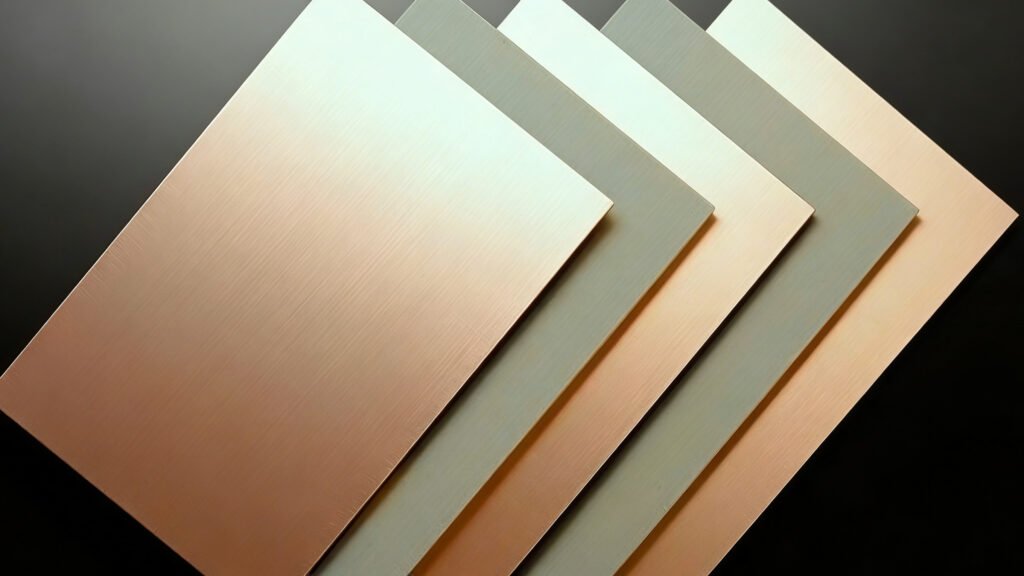
To understand CEM-1, you must visualize a sandwich. The material achieves its unique properties by combining two different types of reinforcement materials:
- The Core (The “Meat”): The center of a CEM-1 sheet is composed of Cellulose Paper (highly refined wood pulp) impregnated with a formulated epoxy resin. This paper core is what gives CEM-1 its cost advantage and its mechanical “punchability.”
- The Surfaces (The “Bread”): To provide strength, rigidity, and moisture resistance, the paper core is sandwiched between layers of Woven Glass Fiber Cloth (typically 7628 style E-glass).
- The Binder: Both the core and the surface layers are bonded together using a flame-retardant Epoxy Resin system.
Visual Identification
If you pick up a raw PCB, how can you tell if it is CEM-1?
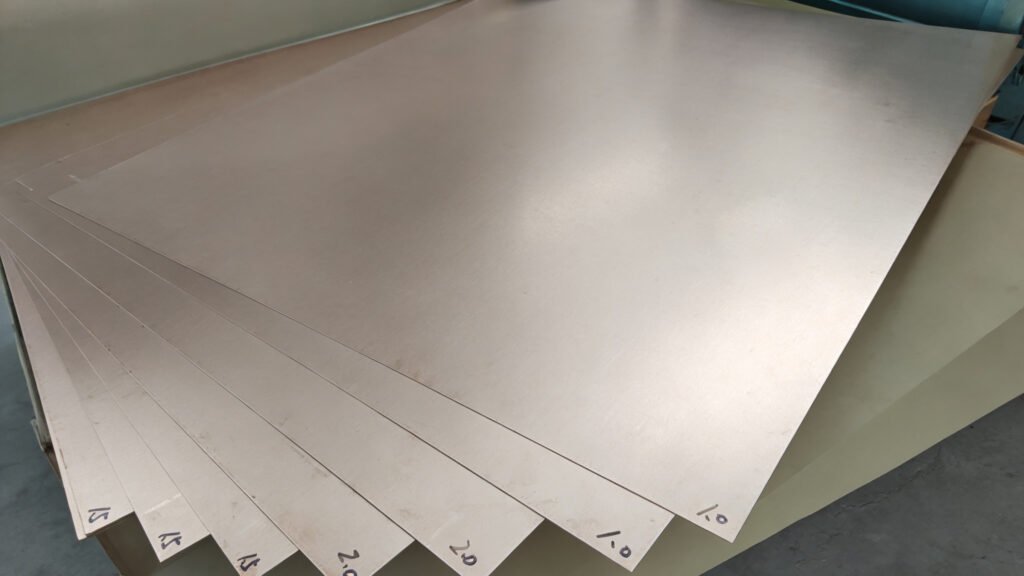
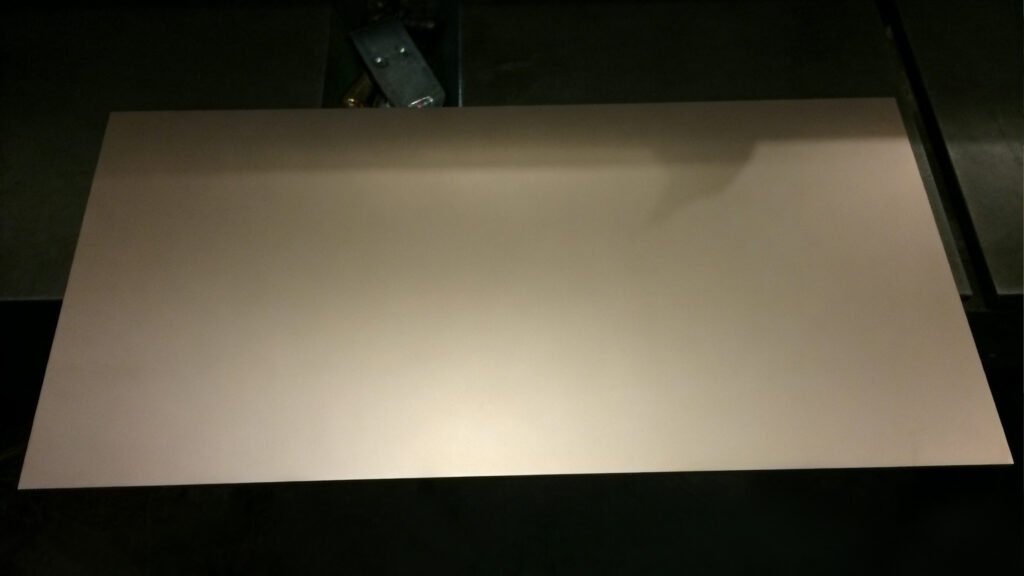
- Color: The base material typically has a milky-white or creamy opaque appearance. In contrast, standard FR-4 is usually translucent yellowish-green (unless dyed).
- Edge Texture: If you look closely at the cut edge of the board, you can often see the distinct white cellulose paper layer in the center, sandwiched by the thinner, harder glass layers.
Standard Specifications
- Flammability: UL 94 V-0 (Self-extinguishing).
- Standard Thickness: 0.8mm to 1.6mm (1.6mm being the industry standard for power supplies).
- Copper Cladding: Usually Single-Sided (1oz or 2oz). While double-sided CEM-1 exists, it is rare because the paper core makes Plated Through Hole (PTH) metallization difficult and unreliable.
2. The Credisyn Manufacturing Process: How CEM-1 Is Made
Producing high-quality CEM-1 requires a distinct manufacturing line compared to FR-4. At Credisyn, we utilize a specialized “Composite Line” to handle the varying absorption rates of paper versus glass.
Step 1: Paper Impregnation (The Core)
The process begins with large rolls of bleached kraft paper. This paper must be treated to resist moisture and bond with epoxy. It is passed through a dip tank containing a low-viscosity epoxy resin mixed with solvents. The paper absorbs the resin, and then passes through a drying oven to reach a semi-cured “B-Stage.”
- Credisyn Quality Check: We monitor the volatile content of the paper prepreg strictly. If the paper is too dry, the layers will delaminate. If too wet, the board will blister during soldering.
Step 2: Glass Cloth Impregnation (The Surface)
Simultaneously, woven E-glass cloth (Style 7628) is impregnated with a higher-viscosity epoxy resin. This layer provides the surface smoothness and mechanical stiffness required to support the copper foil.
Step 3: The Lay-Up
This is where the composite structure is formed. In a cleanroom environment, the stack-up is assembled:
- Copper Foil: (Usually Electro-Deposited, 35μm).
- Glass Prepreg: (1 sheet).
- Paper Prepreg: (Multiple sheets, depending on desired thickness, e.g., 1.6mm requires more paper core).
- Glass Prepreg: (1 sheet). (Note: For single-sided CEM-1, the bottom is a release film or a non-copper clad finish).
Step 4: High-Pressure Lamination
The books (stacks of material) are loaded into a hydraulic press.
- Temperature: 160°C – 175°C.
- Pressure: 300 – 500 psi. The heat cures the epoxy, turning it from B-Stage (semi-solid) to C-Stage (fully cured solid), effectively fusing the paper and glass into a singular, inseparable board.
3. The “Punching” Advantage: Why Manufacturers Love CEM-1
The single greatest advantage of CEM-1 over FR-4 is its machinability, specifically its ability to be Punched (Die-Cut).
Drilling vs. Punching
- FR-4 (Drilling): FR-4 is extremely hard and abrasive due to the high glass content. Holes must be drilled using CNC machines with tungsten-carbide drill bits. This is accurate but slow and expensive (drill bits wear out).
- CEM-1 (Punching): Because the core is cellulose paper, CEM-1 is softer. Instead of drilling holes one by one, a manufacturer can create a steel die with hundreds of pins. A hydraulic press punches all the holes in the PCB simultaneously in a single second.
The Economic Impact
For high-volume production (e.g., 100,000 LED light boards), punching reduces the mechanical processing time by 90%.
- Credisyn Technical Note: While CEM-1 is punchable, it requires a specific temperature range. We recommend heating the CEM-1 sheet to 40°C–60°C before punching to prevent cracking around the holes. This is known as “Warm Punching.” (Some modern “Cold Punch” CEM-1 grades exist, which Credisyn also supplies).
4. Technical Performance: CEM-1 vs. FR-4 vs. CEM-3
To choose the right material, you must understand the trade-offs. Below is a comparative analysis of the three most common rigid PCB materials.
A. CEM-1 vs. FR-4
FR-4 is the industry standard, but is it always necessary?
- Mechanical Strength: FR-4 is stronger and stiffer (Flexural Strength > 500 MPa). CEM-1 is weaker (Flexural Strength ~300 MPa) due to the paper core. Verdict: Use FR-4 for large, heavy boards; use CEM-1 for smaller or supported boards.
- Electrical Properties: FR-4 has a more stable Dielectric Constant (Dk) and lower Dissipation Factor (Df) at high frequencies. Verdict: Use FR-4 for Signal Integrity/High-Speed; use CEM-1 for Power/Lighting/DC circuits.
- Moisture Absorption: FR-4 absorbs less water (<0.2%). CEM-1 absorbs slightly more due to the paper (<0.3%), though the glass surface protects it.
- Through-Holes: FR-4 is designed for Plated Through Holes (PTH). CEM-1 is generally NOT recommended for PTH. The paper core swells differently than glass during the plating process, leading to barrel cracks. Verdict: CEM-1 is strictly for Single-Sided or Double-Sided Non-Plated (Silver Paste) boards.
B. CEM-1 vs. CEM-3
CEM-3 is often called the “FR-4 alternative.”
- Composition: CEM-3 uses a core of non-woven glass felt (fiberglass “fluff”) instead of paper.
- Performance: CEM-3 is more expensive than CEM-1 but cheaper than FR-4. Crucially, CEM-3 allows for Plated Through Holes (PTH).
- Selection Rule: If you need a double-sided board with vias (PTH) to save cost, choose CEM-3. If you only need a single-sided board, choose CEM-1 for maximum savings.
5. Critical Applications of Credisyn CEM-1 Laminates
Where is CEM-1 actually used? You likely own dozens of devices containing Credisyn’s CEM-1 material.
1. LED Lighting (The #1 Market)
The global LED market is cost-sensitive.
- Application: LED bulbs (A19), LED tubes (T8), and commercial downlights.
- Why CEM-1? These boards are usually single-sided (Aluminum is used for high power, but CEM-1 is used for low-to-mid power drivers). The white color of CEM-1 is also beneficial for reflectivity under the solder mask. Credisyn offers High-CTI CEM-1 specifically for LED drivers to prevent arcing.
2. Power Supplies and Adapters
Look inside your laptop charger or phone brick.
- Application: AC/DC converters, Switching Power Supplies (SMPS).
- Why CEM-1? These devices use heavy components (capacitors, transformers) mounted on a single side. The high breakdown voltage of the epoxy/glass surface protects the user, while the low cost keeps the charger price down.
3. Consumer Electronics & Appliances
- Application: Remote controls, Calculator PCBs, Washing Machine control panels, Microwave oven interfaces.
- Why CEM-1? These are “Human Interface” devices that don’t require high-frequency signal processing. They need reliability and low cost. The punchability allows for complex shapes (like the curved shape of a remote control) to be mass-produced cheaply.
4. Industrial Controls
- Application: Relay boards, simple logic controllers, elevator buttons.
- Why CEM-1? Durability and cost.
6. Advanced Specifications: The Credisyn Difference
Not all CEM-1 is created equal. At Credisyn, we have engineered our CEM-1 series (CS-CEM-1) to overcome common limitations of the material.
High CTI (Comparative Tracking Index)
In power supplies, high voltage can cause “tracking” (carbon paths forming across the board surface), leading to short circuits.
- Standard CEM-1: CTI 175V (PLC 3).
- Credisyn High-CTI CEM-1: We formulate our resin with specialized inorganic fillers to achieve CTI 600V (PLC 0). This is critical for EV chargers and high-voltage industrial power supplies, ensuring safety and UL compliance.
High Thermal Reliability
Standard paper-based laminates can suffer from “measling” (white spots) or blistering during lead-free soldering (260°C).
- The Solution: Credisyn uses a modified phenolic-epoxy blend that increases the thermal stress resistance. Our CEM-1 passes the 260°C / 10-second solder float test without delamination, making it fully compatible with modern Lead-Free (RoHS) wave soldering processes.
Dimensional Stability
Paper cores can shrink or expand with humidity.
- The Solution: We utilize strictly controlled “Electronic Grade” Kraft paper with long cellulose fibers and precise moisture control during impregnation. This ensures that when our customers punch holes for components, the holes align perfectly with the automated insertion machines.
7. Design Guidelines for Using CEM-1
If you are a PCB designer looking to switch from FR-4 to CEM-1 to save costs, follow these design rules:
- Single Layer Only: Design your circuit on the bottom layer. Use jumper wires if you need to cross traces. Do not attempt Plated Through Holes.
- Hole Size: If punching, ensure the hole diameter is not less than 50% of the board thickness (e.g., for a 1.6mm board, min hole size 0.8mm) to prevent punch breakage.
- Component Weight: For very heavy transformers, consider adding mechanical support or adhering the PCB to the chassis, as CEM-1 has lower flexural strength than FR-4.
- Thermal Management: CEM-1 has a thermal conductivity of roughly 0.25 W/m·k. If your LEDs run hot, ensure you have adequate heat sinks or wide copper pours to dissipate heat, as the paper core acts as an insulator.
8. Sustainability and Environmental Impact
In the past, paper-based laminates were criticized for using solvent-heavy manufacturing. Credisyn is changing the narrative.
- Green Manufacturing: Our CEM-1 production lines utilize Regenerative Thermal Oxidizers (RTO) to capture and incinerate 99% of VOCs (Volatile Organic Compounds) released during the curing process.
- Lead-Free Compatible: Our materials meet RoHS 3 and REACH standards, containing no restricted heavy metals or hazardous flame retardants (like PBDEs).
- Energy Efficiency: Because CEM-1 cures at slightly lower temperatures and faster rates than high-Tg FR-4, the embodied energy per square meter is lower, resulting in a smaller carbon footprint for the final product.
9. Conclusion: The Smart Choice for High-Volume Electronics
In an era of supply chain volatility and cost pressure, CEM-1 Laminate remains a champion of the electronics industry. It is not a “low-quality” substitute; it is a fit-for-purpose engineering material. It offers the perfect synergy of electrical insulation, mechanical punchability, and economic efficiency for single-sided applications.
For Credisyn, CEM-1 is a core part of our identity. We combine the traditional benefits of this composite material with modern manufacturing precision—offering High-CTI, Lead-Free compatible, and dimensionally stable laminates that drive the world’s lighting and power industries.
Are you over-specifying your PCBs? If you are using FR-4 for single-sided LED or power supply boards, you might be overpaying by 30%. Contact the Credisyn Technical Application Group today. Let us help you validate CEM-1 for your next project and unlock significant production savings without compromising quality.
Frequently Asked Questions (FAQ)
Q: Can I use CEM-1 for double-sided PCBs? A: Technically, yes, but with limitations. You can have copper on both sides, but you cannot have Plated Through Holes (PTH) connecting them reliably. Connection must be made via jumper wires, eyelets, or silver paste filling (though the latter is rare now). For true double-sided PTH boards, use CEM-3 or FR-4.
Q: Is CEM-1 Halogen-Free? A: Standard CEM-1 contains brominated flame retardants to achieve UL 94 V-0. However, Credisyn offers a specialized Green CEM-1 series that is Halogen-Free, using phosphorus/nitrogen-based flame retardants to meet eco-friendly standards.
Q: What is the maximum operating temperature for CEM-1? A: The typical Glass Transition Temperature (Tg) of CEM-1 is between 110°C and 130°C. The Maximum Operating Temperature (MOT) or RTI (Relative Thermal Index) is typically rated at 105°C to 130°C depending on the UL file. It is suitable for consumer electronics but not for under-hood automotive applications.
Q: Why is CEM-1 usually white? A: The natural color of the cellulose paper core is off-white, and the epoxy resin adds a creamy tint. However, Credisyn can add pigments to the resin system to produce yellow or even black CEM-1 if required for optical blocking in LED applications.
Q: How much cheaper is CEM-1 compared to FR-4? A: While market prices fluctuate with copper and resin costs, CEM-1 is generally 20% to 30% cheaper than standard FR-4. Additional savings are realized in the PCB fabrication stage due to the faster punching process versus drilling.
Paper core copper-clad substrate
Glass cloth copper-clad substrate
Cloth paper composite copper-clad substrate
Cloth felt composite copper-clad substrate
Paper core copper-clad substrate
Glass cloth copper-clad substrate
Cloth paper composite copper-clad substrate
Cloth felt composite copper-clad substrate
Credisyn quality copper clad laminates for global electronics
Credisyn-Professional CCL manufacturer, delivering reliable electronic substrate solutions worldwide.
Quick Link
Email: info@credisyn.com
Quick Link
Add: No. 18 Hong Kong Middle Road, Qingdao, China
Copyright © 2025 Website Title Copper Cladd Laminated Supported by Credisyn technology